Gas chromatography
Published over 13 years ago. See the latest and most current information on Gas chromatography.
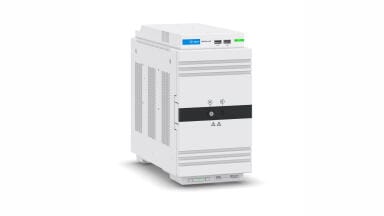
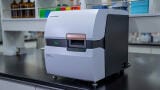
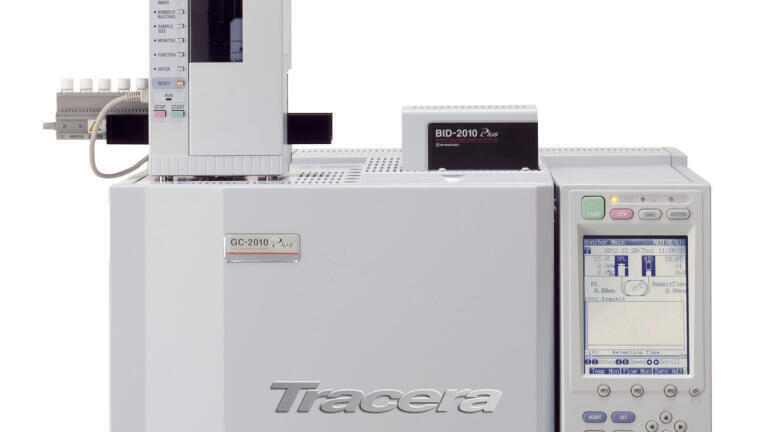
Shimadzu Corporation have introduced the Tracera, a high-sensitivity gas chromatograph. Tracera is equipped with the newly developed barrier discharge ionisation detector (BID), which is capable of detecting all types of trace organic and inorganic compounds, with the exception of helium (He) and neon (Ne), at the 0.1 ppm level. Tracera GC is applicable for many types of high-sensitivity analyses typically performed with GC systems incorporating different detectors.
Shimadzu has investigated the basics of plasma detection technology as a means for in-creasing sensitivity stability and the detectable concentration range. This has resulted in the barrier discharge ionisation detector (BID), a new detector capable of the high-sensitivity detection of both organic and inorganic compounds, while providing excellent durability.
The built-in barrier discharge ionisation detector (BID) generates helium plasma. The ex-tremely high photon energy of this plasma ionises the sample components, enabling high-sensitivity detection. This system achieves at least 100 times the sensitivity of a conventional TCD, and at least twice the sensitivity of FID, enabling the detection of all types of trace components at the 0.1 ppm level.
The new BID helium plasma has an extremely high energy. It can detect all organic and inorganic compounds, with the exception of He and Ne, with no difference in sensitivity. It improves analysis sensitivity even with aldehydes, alcohols, and halides, for which sensi-tivity decreases with FID. A single Tracera system can perform analyses that convention-ally required complicated systems equipped with multiple detectors and units. Examples include the analysis of hydrogen and organic compounds such as formic acid, generated as part of the reaction process during artificial photosynthesis, and the analysis of low concentration hydrocarbons and permanent gases generated in lithium ion rechargeable batteries.
With the new BID, the plasma is generated inside a quartz tube, so it makes no contact with the discharge electrode used for plasma generation. As a result, the detector elec-trode is not degraded, achieving long-term analytical stability.
ILM 51.6 Sept 2026

 Product directory