Laboratory news
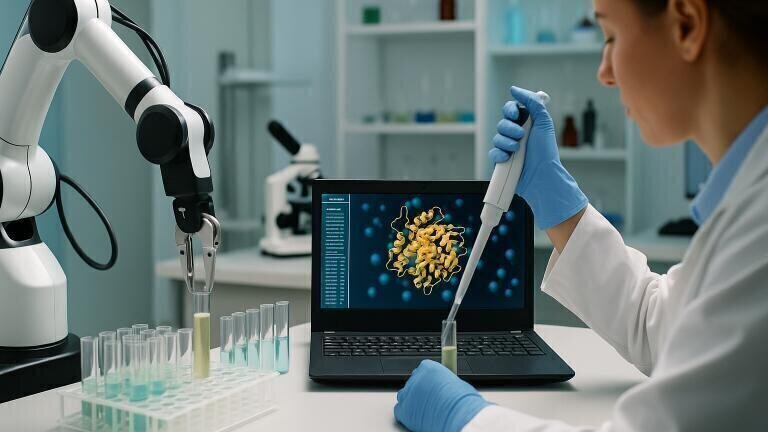
Researchers at the University of Illinois Urbana–Champaign, Illinois, have successfully integrated artificial intelligence, automated robotics and synthetic biology to enhance the performance of two industrial enzymes and establish a generalisable workflow for improving many more.
The study, led by Professor Huimin Zhao of the Department of Chemical demonstrated how AI-driven design and automation could overcome key limitations in enzyme efficiency and selectivity. Enzymes are widely used in sectors such as energy, therapeutics and consumer products, yet their broader application is constrained by inefficiencies and poor target discrimination.
“Improving enzyme function is difficult because it often requires multiple synergistic mutations, and we do not know in advance which ones to introduce,” said Zhao, who is also affiliated with the Carl R. Woese Institute for Genomic Biology.
“Our integrated AI and synthetic biology approach offers an efficient solution,” he said.
Zhao’s team had previously developed an AI model capable of predicting enzyme function based on protein sequence. In this latest work, they extended that capability to suggest specific sequence alterations likely to improve enzyme performance. Given the astronomical number of possible sequence variants, the model was used to generate a manageable subset of promising candidates.
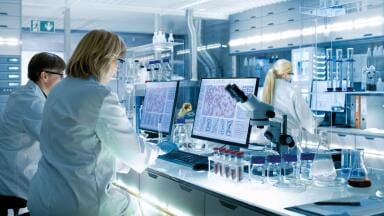
The experimental phase took place at the university’s iBioFoundry, a facility dedicated to the rapid design, construction and testing of biological systems. Led by Zhao and supported by the US National Science Foundation, the iBioFoundry provided the automated infrastructure to build and assess the proposed enzyme variants.
The process followed a closed-loop cycle whereby the AI model proposed sequence modifications, which were synthesised and tested using automated platforms. Performance data from these tests then informed and refined subsequent predictions.
“It is a step towards a self-driving lab – a system where AI designs the proteins, robotics builds and tests them, and the results inform the next round,” said Stephan Lane, iBioFoundry manager and co–first author of the paper.
This approach yielded significant improvements. One enzyme, used to enhance the nutritional value of animal feed, demonstrated a 26-fold increase in activity. The second, employed in chemical synthesis, exhibited 16 times greater catalytic activity and 90 times greater specificity for its target substrate.
Although only two enzymes were highlighted in the paper, the researchers emphasised the method’s broad applicability.
“We need only a protein sequence and an assay. We aim to apply this to as many enzymes as possible,” said Zhao.
The team is now working to refine the AI algorithms further and upgrade the automation systems to increase throughput. A user interface has also been developed, enabling scientists without coding experience to interact with the platform using plain English.
“The idea is to make the system accessible,” said Tianhao Yu, a graduate student and coauthor.
“An experimentalist can simply describe their requirements in English, and the platform will run the analysis automatically,” he concluded.
For further reading please visit: 10.1038/s41467-025-61209-y
ILM 51.6 Sept 2026



 Product directory

























.jpg)
