Laboratory news
Europe’s laboratories are increasingly ready to change, yet many researchers feel more constrained than ever. This is one of the central findings of the 2026 Mood Barometer from Starlab International GmbH, based on a survey of more than 360 laboratory employees across six European countries.
The study, titled Ready to unlock: What paralyses Europe’s laboratories, which levers are effective, paints a complex picture of an industry facing mounting pressures. A growing willingness to innovate is colliding with structural barriers, financial constraints and rising stress levels among laboratory staff.
For the first time, lack of budget has emerged as the biggest challenge facing laboratories. In 2026, 44% of respondents cited insufficient funding as their primary concern. Just a year earlier the situation looked different: in 2025, rising prices for consumables dominated industry concerns, with 42% identifying this as a major issue. The shift suggests that the problem has moved beyond price pressure to a more fundamental shortage of financial resources.
“The problem seems to be less cyclical than structural. This is a warning signal,” said Benedikt Geldmacher-Voss, Head of Starlab Group. “If financing becomes the number one concern, the entire future viability of the industry will come under pressure.”
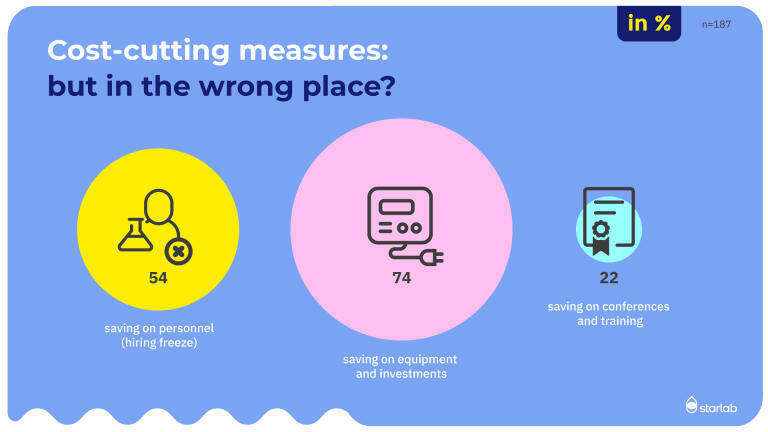
More than half of laboratories (57%) report introducing active cost-cutting measures. However, the areas where savings are being made are raising concern. Around 74% say they are reducing spending on equipment and infrastructure — precisely the areas that underpin future research capacity. Meanwhile, 54% have halted new hiring despite an existing shortage of skilled personnel, and 22% have reduced funding for conferences and professional development.
Employee satisfaction has also declined. While 76% of laboratory staff reported being satisfied with their work in 2025, that figure has fallen to 63% in 2026. One in three respondents now reports experiencing high or very high levels of stress.
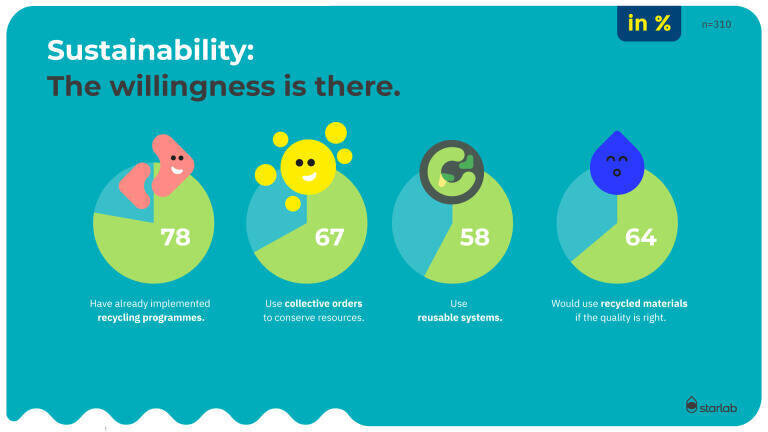
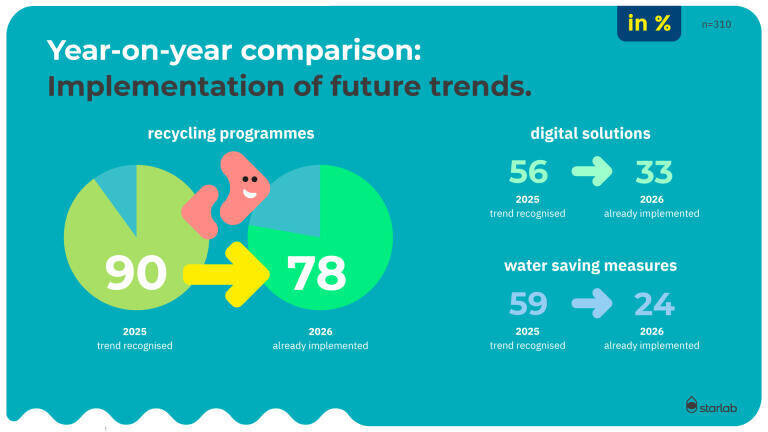
Despite these pressures, the survey suggests that laboratories remain forward-looking. Sustainability initiatives are already widely adopted: 78% of laboratories operate recycling programmes, 67% use collective ordering to reduce waste and 58% report using reusable systems. Meanwhile, 64% say they would be willing to use recycled materials if quality standards are maintained. One example highlighted by Starlab is its TipOne recycling programme, which enables laboratories to return polypropylene packaging so the material can be reprocessed and reused in new racks, creating a closed material cycle.
Digitisation is also gaining traction. Nearly half of respondents (46%) report occasional use of artificial intelligence in the laboratory, while 13% say they use it regularly. When it comes to future skills, interdisciplinary thinking ranks highest at 61%, followed by digital skills at 54% and soft skills at 47%. Notably, 64% of respondents rate social skills as equally or more important than technical expertise.
According to Starlab, the findings suggest Europe’s laboratories already have the willingness, tools and knowledge needed to adapt. Unlocking that potential, however, will depend on stronger funding conditions and the confidence to rethink established structures.
More information online
ILM 51.6 Sept 2026



 Product directory