
Laboratory products
Ethanol content determines the flash point in cosmetic products. A low flash point can be a safety issue not only in transportation but also during production, especially in summertime. The large quantities of ethanol required for production entail a major risk if the flash point temperature of the cosmetic product is lower than the ambient temperature. Therefore, to limit the amount of evaporating ethanol, it is sometimes necessary and good practice to reduce the ethanol content in formulations during high-temperature seasons.
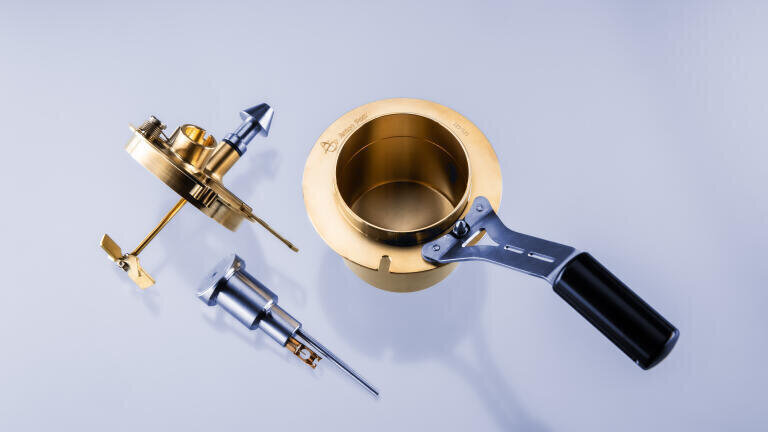
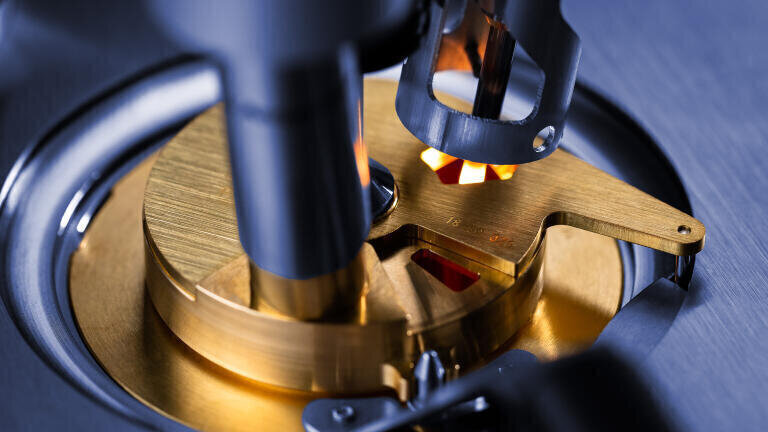
Anton Paar’s ABA 500, ABA 300, TAG 500, and TAG 300 are perfectly suited for measuring flash points of ethanol-containing samples. The impact of small changes in ethanol concentration can be tracked closely thanks to the high precision of our Abel and TAG flash point testers.
The following measurements show how the flash point is changed by adding only a small amount of ethanol to the original products. For the tests, we used three different original cosmetic products:
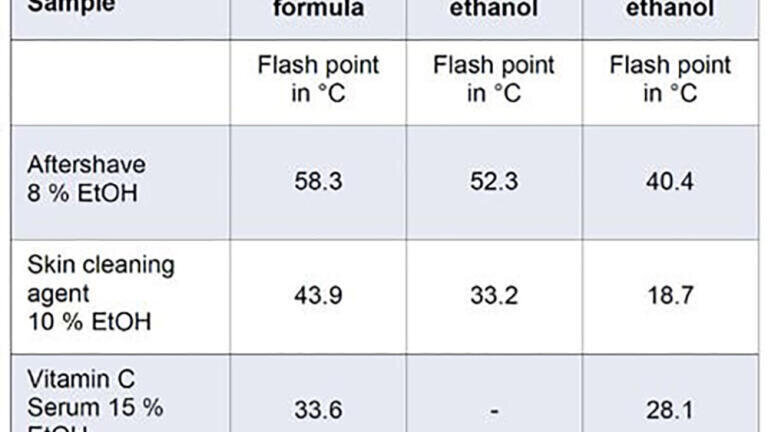
The following table shows the flash points that were found for the:
| Sample | Original sample formula | Sample with + 2 % ethanol | Sample 20 % total ethanol |
| Flash point in oC | Flash point in oC | Flash point in oC | |
| Aftershave 8 % EtOH |
58.3 | 52.3 | 40.4 |
| Skin cleaning agent 10 % EtOH |
43.9 | 33.2 | 18.7 |
| Vitamin C Serum 15 % EtOH |
33.6 | - | 28.1 |
Flash point tests were conducted with ABA 500 and the standard ISO 13736 test kit. For expensive cosmetics samples, test kits with reduced sample volume are available for the ABA X00.
The test result is the barometric-pressure-corrected temperature.
ILM 51.6 Sept 2026



 Product directory


















.jpg)
.jpg)
.jpg)


.jpg)
