Laboratory products
Published over 4 years ago. See the latest and most current information on Laboratory products.
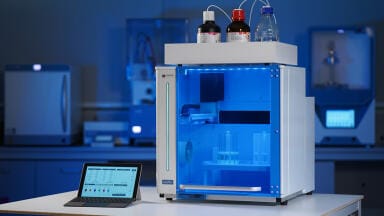
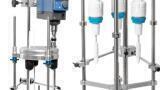
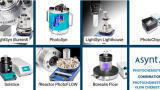
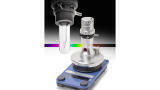
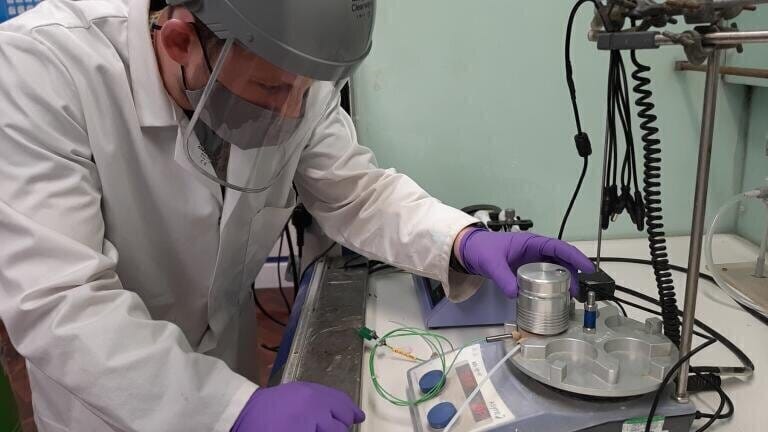
A new paper, written by a multidisciplinary team of experts at the Institute for Process Research and Chemistry (iRPD) at the University of Leeds, describes how Asynt’s fReactor flow chemistry system, with add-on photochemical flow modules, improves synthetic reactions commonly used in the preparation of drug intermediates.
The new paper describes a series of multiphasic Flow Chemistry reactions undertaken by iRPD researchers using the fReactor Photo Flow platform. Experimental data is provided for a series of relevant reactions including a benzylic bromination with a subsequent nucleophilic substitution step used in the synthesis of the anti-hypertensive drug Valsartan; a reaction where a reagent is used in slurry form to minimise solvent use resulting in significantly higher productivities that would otherwise be possible, an efficient oxidation reaction using air as a simple and safe oxidising agent, and photochemical synthesis of 1,2-diamines with productivities of over 50 times that possible by batch chemistry protocols.
Dr Francis from the iPRD commented: "The fReactor Photo Flow has provided us with an easy-to-use, powerful platform to undertake high productivity photochemistry in Flow Chemistry applications. Integrating the efficiency of flow processing with the advanced mixing of a continuous stirred tank reactor, we have found fReactor Photo Flow to be well-suited to performing multiphasic reactions allowing our chemists to explore continuous-flow processing, with little expertise required."
The iPRD has a long track record of working with industry in developing chemical processes and equipment and in translating findings back to partners. In the described research - iPRD Professors Blacker, Marsden and Kapur, together with Dr Francis who carried out the practical work, worked closely with industry partners - Sterling Pharma Solutions and Redbrick Molecular - to identify relevant reactions to test the performance of the fReactor Photo Flow platform, before optimising reaction conditions.
In contrast to many tubular or plate-based flow chemistry systems, the Asynt fReactor with Photo Flow modules is especially well-suited to handling multiphasic solid-liquid and gas-liquid photochemical reactions.
Download a copy of the new iRPD paper.
More information online
ILM 51.6 Sept 2026




 Product directory


.jpg)










.jpg)