Laboratory products
Published over 14 years ago. See the latest and most current information on Laboratory products.
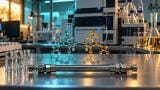
A team of researchers from Glasgow University have built what they call ‘reactionware’, enabling novel techniques in 3D printing technology to simplify the production of drugs.
The new system could lead to home design and synthesis of pharmaceuticals, with basements and bedrooms being turned into the laboratories of the future.
Reactionware are “special vessels for chemical reactions which are made from a polymer gel”, the researchers explain. These will replace traditional laboratory vessels such as beakers, because they both house the chemical reaction and are part of the chemical reaction itself. The process becomes much more simple, with researchers simply adding chemicals to the polymer gel and then 3D printing it into the matrix.
Professor Lee Cronin, Chair of Chemistry at the University of Glasgow said: “It’s a new way for chemists to think, and it gives us very specific control over reactions because we can continually refine the design of our vessels as required."
Reactionware could signal a new era for research scientists and business as it allows them the ability to create novel industrial products, such and detergents and pigments, as well as opening the door to personalised chemical products, such as medicines.
Posted by Ben Evans
ILM 51.6 Sept 2026




 Product directory