Research news
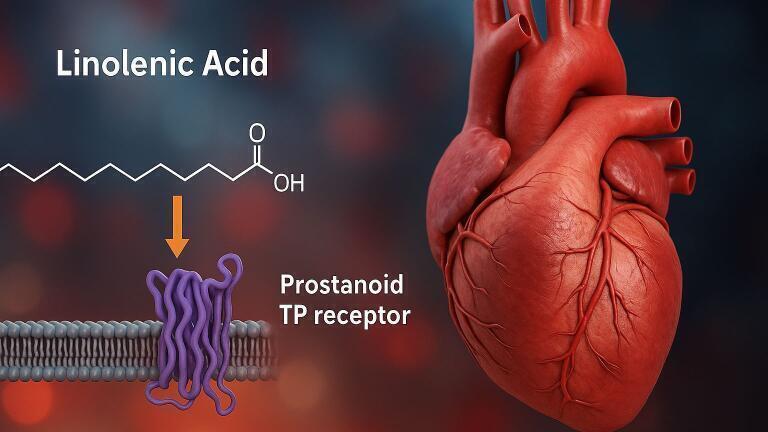
Gamma-linolenic acid (GLA), a fatty acid present in evening primrose and borage oils, can directly relax constricted coronary arteries by blocking thromboxane prostanoid (TP) receptors, according to laboratory research from Toho University in Tokyo.
The research group, led by Dr Keisuke Obara, Dr Kento Yoshioka and Professor Yoshio Tanaka of the Department of Chemical Pharmacology, Faculty of Pharmaceutical Sciences, found that GLA selectively inhibited contractions in isolated pig coronary arteries triggered by TP receptor agonists while exerting little effect on other contraction pathways.
“GLA – a non-omega-3 fatty acid – showed the same ability as omega-3s to inhibit TP receptor signalling,” Obara said.
Coronary artery spasm, the sudden narrowing of arteries that supply the heart, provokes angina and heightens the risk of myocardial infarction. Such spasms are often driven by TP receptors responding to chemical messengers including thromboxane A2 and prostaglandin F2α.
The concentrations of GLA that produced relaxation in the study are achievable through dietary supplementation. Because GLA is also metabolised into compounds with anti-inflammatory properties, the authors suggest that increasing intake could help prevent coronary spasm and related heart conditions.
They caution, however, that clinical trials are needed to confirm the mechanism in humans and to assess long-term safety.
For further reading please visit: 10.1016/j.jphs.2025.05.009
ILM 51.6 Sept 2026



 Product directory



















,-photo-Karin-Allander.jpg)








.jpg)
