Research news
Macrophages which have undergone metabolic reprogramming have shown potential to accelerate bone repair by synchronising bone regeneration with blood vessel formation
Scientists at Trinity College and RCSI University of Medicine and Health Sciences, both of Dublin, Ireland, and the University of Genoa, Italy. have developed novel ‘hybrid’ immune cells that may enhance bone healing by simultaneously promoting bone regeneration and blood vessel formation, an integrated effect that has not previously been achieved within a single therapeutic approach.
The findings address a longstanding clinical challenge in that around 10 per cent of bone fractures fail to heal adequately, particularly among older adults, individuals with diabetes and patients who sustain complex or large fractures. The ability to accelerate and coordinate tissue repair could therefore improve outcomes for substantial numbers in the patient population.
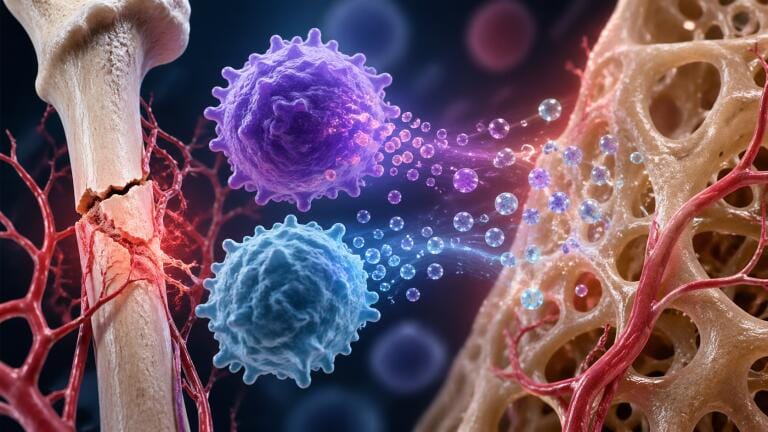
The research centred on macrophages, a class of specialised immune cells that orchestrate the body’s response to injury. These cells exhibit functional plasticity enabling them to transition between distinct activation states. In the early phase of bone injury, macrophages adopt a pro-inflammatory M1 phenotype, which clears out cellular debris and damaged tissue. At a later stage, they then switch to an M2 phenotype to support tissue reconstruction and remodelling.
“How exactly this switch occurs during bone repair is poorly understood but our study has gone some way to solving that puzzle,” said Professor David Hoey from Trinity’s School of Engineering, who was co-senior author of the study.
“Scientists have known for some time that macrophages release tiny particles called extracellular vesicles, small packages that carry biological signals and are taken up by neighbouring cells.
“What our group discovered was the role they play during bone repair and – crucially – that their effects depend entirely on which state the macrophage is in when it releases them,” he added.
The investigators demonstrated that extracellular vesicles derived from M1 macrophages initiated bone formation, whereas vesicles from M2 macrophages stimulated angiogenesis, the formation of blood vessels required to deliver oxygen and nutrients to the healing tissue. This functional division suggested that each macrophage state contributes complementary elements of the repair process.
To build on this observation, the team explored whether it might be possible to engineer a macrophage phenotype that combines both regenerative functions. Their approach focused on cellular metabolism which governs the biochemical pathways that sustain cell activity. By using the small molecule DASA-58 to modulate metabolic pathways, the researchers induced macrophages to adopt an intermediate, ‘hybrid state’ that sits between the M1 and M2 phases.
“Crucially, the particles released by these hybrid cells were different. These hybrid particles were able to both support novel bone formation and promote blood vessel growth at the same time, effectively combining the benefits of both M1 and M2 particles into a single population – and without triggering unwanted inflammation,” said Hoey.
This dual functionality represents a potentially important advance in regenerative medicine, where therapeutic strategies often struggle to coordinate multiple aspects of tissue repair. By contrast, the hybrid extracellular vesicles appear to provide a unified signal that supports both structural regeneration and vascular integration.
The implications extend to the design of cell-derived therapies. Extracellular vesicles have emerged as promising therapeutic agents because they can deliver bioactive molecules without the complexities associated with live cell transplantation. Approximately 500 clinical trials to investigate extracellular vesicle-based therapies are currently underway worldwide reflecting the growth in interest in their translational potential.
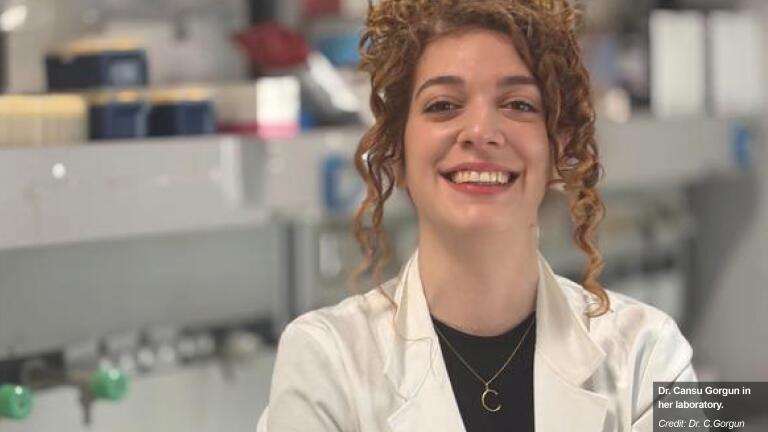
“We’ve shown that it’s possible to guide immune cells to produce vesicles that support multiple stages of healing which could be a very valuable approach to improve bone repair,” said Dr Cansu Gorgun, who was lead author of the study from the University of Genoa.
The research team has indicated that the next phase will involve further validation through in vitro and preclinical studies to assess efficacy and safety in more complex biological systems.
“By reprogramming cell metabolism, we can design novel kinds of regenerative signals. This is still relatively early stage, but it represents a very promising step toward next generation therapies for patients,” said Professor Annie Curtis of RCSI, senior co-author.
If successful, this strategy could lay the groundwork for therapies that not only accelerate bone healing but also restore functional integrity more reliably than current approaches.
For further reading please visit: 10.1016/j.biomaterials.2026.124216
ILM 51.6 Sept 2026


 Product directory


.jpg)
.jpg)















,-photo-Karin-Allander.jpg)