Research news
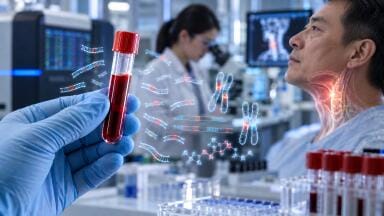
Two advanced predictive machine learning algorithms developed by researchers in England significantly improved the ability of general practitioners to identify patients with a currently undiagnosed cancer, including hard-to-detect liver and oral cancers. By incorporating routine blood test results alongside known risk factors, these models offered a substantial advance in the early detection of cancer within primary care.
Researchers from Queen Mary University of London and the University of Oxford used anonymised electronic health records from more than 7.4 million adults in England to train and validate two novel algorithms. Compared with existing tools such as QCancer, the new models demonstrated higher sensitivity and the potential to transform clinical decision-making and early diagnosis.
Unlike previous models, the algorithms incorporated seven standard blood tests, including full blood count and liver function biomarkers, alongside a patient’s age, family history, existing medical conditions, symptoms and general health. This approach enabled more accurate risk estimates for 15 cancer types, including lung, colorectal, breast, prostate, ovarian, uterine, pancreatic, testicular and gastro-oesophageal malignancies.
In addition, the researchers identified four new medical conditions linked with increased cancer risk, as well as two new family history associations for blood and lung cancer. Seven additional symptoms, including itching, bruising, hoarseness, back pain and dark urine, were found to be associated with multiple cancers.
Notably, the algorithms were the first of their kind able to estimate the likelihood of an undiagnosed liver cancer in a primary care setting.
“These algorithms are designed to be embedded in clinical systems and used during routine consultations. They represent a significant improvement on current models, particularly in identifying cancers at earlier, more treatable stages,” said Professor Julia Hippisley-Cox, professor of clinical epidemiology and predictive medicine at Queen Mary University of London and lead author of the study,
“By using existing data available in medical records, this approach is both cost-effective and scalable – helping the NHS meet its goal of improving early cancer diagnosis by 2028,” she added.
These new tools demonstrate a clear ability to identify individuals most at risk of 15 different cancer types using symptoms, blood results and lifestyle factors offering the potential for earlier diagnosis including in some rare forms of cancer.”
For further reading please visit: 10.1038/s41467-025-57990-5
ILM 51.6 Sept 2026



 Product directory















,-photo-Karin-Allander.jpg)