
Research news
The tetravalent dengue vaccine Qdenga showed significant real-world effectiveness – particularly for adolescents – in reducing symptomatic cases and hospitalisations during São Paulo outbreak in 2024
An international research team gathered the first real-world evidence that the tetravalent dengue vaccine Qdenga can protect against the disease during a major epidemic. The study analysed the performance of the vaccine during the 2024 outbreak in São Paulo, Brazil, and has demonstrated its effectiveness in routine conditions outside clinical trials.
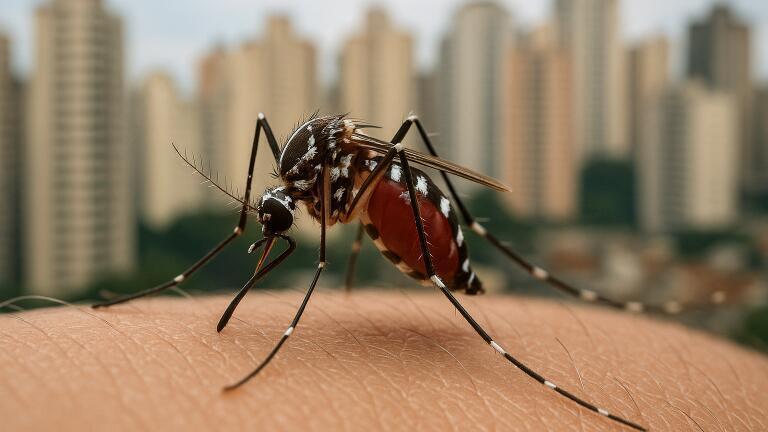
The research was led by Dr Otavio Ranzani, head of the DataHealth Lab at the Sant Pau Research Institute (IR Sant Pau) in Barcelona, in collaboration with Dr Julio Croda of the Oswaldo Cruz Foundation (Fiocruz), Brazil. Globally, dengue fever is one of the fastest-growing mosquito-borne viral infections, with millions of cases reported each year across tropical and subtropical regions. Driven by climate change and the expansion of the Aedes mosquito habitat, outbreaks are increasingly reported in non-endemic regions, including parts of Europe.
São Paulo, which was the epicentre of the 2024 epidemic in Brazil, recorded tens of thousands of infections. In response, health authorities prioritised adolescents aged 10 to 14 years for vaccination, consistent with the current recommendation of the World Health Organization.
This cohort accounted for a high proportion of symptomatic cases in endemic areas, facing a considerable risk of hospitalisation, and was more likely to exposed to mosquito bites due to the characteristics of their daily activities. Across the year, around 690,000 doses of Qdenga were administered to adolescents across the city and state of São Paulo.
The researchers evaluated more than 90,000 adolescents who presented with acute fever and underwent specific diagnostic tests, including NS1 antigen detection and polymerase chain reaction. Using a test-negative case-control design, they compared vaccination rates among patients who tested positive for dengue with those who tested negative, in order to estimate vaccine effectiveness in real-world settings.
The findings showed that Qdenga reduced symptomatic dengue cases by around 50% after the first dose and 62% after the second dose. Hospital admissions fell by 68%. Protection began within 14 days of the first dose, was sustained for three months, and then began to decline. This underlined the significance of completing the recommended two-dose schedule to achieve longer-lasting levels of immunity.
“This study design allowed us to quickly and accurately evaluate the vaccine’s effectiveness in the midst of an epidemic, using real patient data from the healthcare system. It is a powerful approach to generate evidence in health emergencies,” said Dr Ranzani.
The study had several notable strengths. It represented the first assessment of Qdenga in real-world conditions during a large-scale epidemic, involved a substantial number of adolescents, and used a design that limited biases linked to healthcare-seeking behaviour. The results remained consistent across different statistical analyses, reinforcing confidence in the conclusions.
Nevertheless, the authors acknowledged limitations. Vaccine coverage remained relatively low, reducing the ability to analyse in detail the effectiveness of the second dose. Information on previous dengue exposure among adolescents was lacking, and the epidemic was dominated by two virus serotypes, DENV-1 and DENV-2, preventing an assessment of the vaccine against all four of the vaccine’s valencies – DENV-1, DENV-2, DENV-3, and DENV-4.
“Although the study has some limitations, the findings consistently show that Qdenga protects against dengue and reduces the risk of hospitalisation. These data will be critical in guiding countries’ decisions on vaccination,” emphasised Dr Ranzani.
Until now, evidence on Qdenga’s performance had come only from controlled phase 3 trials. This investigation is the first to measure its impact in the general population under epidemic conditions, reinforcing its value for public health planning.
Although Europe remains largely non-endemic, the climate change-linked growth in the territory habitable to the Aedes mosquitoes has already allowed local transmission of dengue fever to occur in France and Italy, alongside the rise in ‘imported’ cases from endemic parts of the world.
Catalonia reported more than 500 imported infections between 2022 and 2024, and has recorded isolated local cases, including its own 2024 outbreak.
“Although in Catalonia and [across other parts of] Europe most cases are still imported, the risk of local transmission is increasing. Having effective vaccines like Qdenga can make a difference in responding to future outbreaks and protect travellers,” said Dr Ranzani.
The results have important implications. In endemic countries, they support the use of Qdenga in emergency vaccination campaigns to reduce the burden on health systems during epidemics, as protection begins within weeks of a single dose. In non-endemic regions, the findings highlight the potential role of the vaccine in prophylaxis for travellers and in containing local outbreaks, strengthening preparedness against the wider spread of Aedes mosquitoes.
“The message is clear: the vaccine works and can protect against both mild and severe dengue. But to ensure sustained protection, we must complete the vaccination schedule. Our results can help policymakers and regulatory agencies better plan vaccination strategies,” added Dr Ranzani.
For further reading please visit: 10.1016/s1473-3099(25)00382-2
ILM 51.6 Sept 2026



 Product directory






















,-photo-Karin-Allander.jpg)




.jpg)
