Research news
Researchers at the University of Connecticut have reported a novel bovine embryonic stem cell line with improved pluripotency and broader translational potential. The platform has opened routes to cultivated meat production, reproductive biology research and large-animal disease modelling
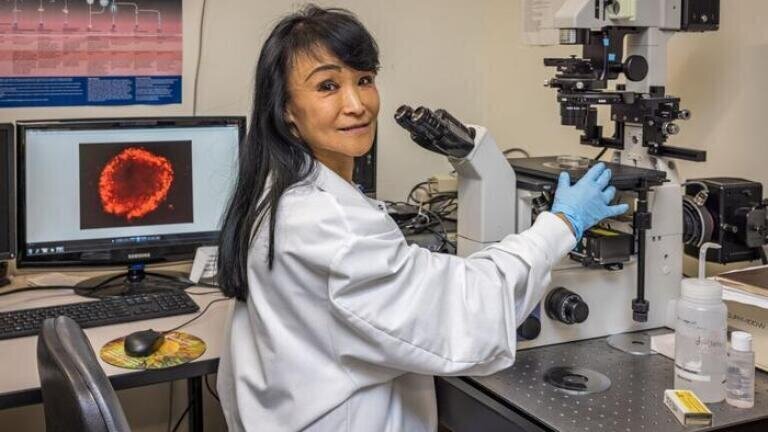
Researchers at the University of Connecticut’s (UConn) College of Agriculture, Health and Natural Resources, Mansfield, Connecticut, USA, have developed a novel bovine embryonic stem cell line with potential to support cultivated meat, reproductive biology and translational biomedical research. The study was led by Dr Xiuchun ‘Cindy’ Tian, professor of biotechnology in the department of animal science, with graduate researchers Dr. Yue Su, and doctoral candidates Jiaxi Liu and Ruifeng Zhao.
The team derived pluripotent stem cells from bovine embryos at the blastocyst stage, when a fluid-filled cell cluster prepares to implant in the uterus. They cultured the cells with mouse feeder cells and a tailored medium to preserve pluripotency in vitro. The objective was to keep cells in an early developmental state before commitment to a specific tissue outcome which later allows direction into lineages such as muscle, fat and germ-cell precursors.
The group claimed that few laboratories worldwide have established robust bovine embryonic stem cell systems and suggested their platform was technical superior.
“The advantage of our cells compared with previous publications is that we can generate the formative embryonic stem cells which can directly induce the primordial germ cell-like cells, the precursor to sperm and eggs, for potential in vitro gametogenesis,” said Liu.
Primordial germ cell-like cells can support studies of fertility, heredity and early developmental programming.
A central part of the work came from culture chemistry where the researchers used a commercially available base medium and added selected small molecules to create a proprietary formulation that improved cell quality and stability.
“Every animal species has different requirements to maintain pluripotency because the cells … are all slightly different,” said Zhao.
“If you use the medium from another animal species, it will not work. So we added some of the extra factors to make the system work better,” he added.
Pluripotent cells tend to exit that state unless environmental cues suppress differentiation. Without precise signalling control, cultures can lose utility.
“Our cells, based on our special medium, are maintained in such a more pluripotent state than previously reported studies. This is an advance in the field,” said Tian.
The UConn team has previously established bovine induced pluripotent stem cells, which require genetic reprogramming to return mature cells to an embryonic-like state. By contrast, embryonic stem cells are derived directly from embryos and therefore do not require reprogramming. For commercial and regulatory planning, this distinction is important because products that include exogenous genetic constructs can face stricter scrutiny.
“That could be a safety issue or a regulatory issue. Therefore, we wanted to derive a clean pluripotent cell line just from the embryo,” said Zhao.
The embryonic route can also reduce process steps, lower variation between lines and improve scale-up consistency.
Cultivated meat is a prominent potential application given that in principle, pluripotent bovine cells can provide a renewable source for muscle and fat differentiation, the two main cellular components desirable for meat products such as burgers. Although full commercial scale still requires progress in bioreactor engineering, cost reduction and food-grade culture workflows, a stable bovine embryonic stem cell platform addresses a foundational input which is cell quality.
The same cell resources can support biomedical programmes because large-animal systems often provide better size and physiological context than rodent models for selected translational questions. Cattle-derived cell models may assist preclinical assay development – including drug discovery and antibody characterisation – and can support comparative studies of mammalian early development.
Despite the progress, the team identified hurdles before full commercial deployment. Current reliance on mouse feeder cells can complicate food-facing applications because animal-derived feeder systems add supply-chain and regulatory complexity. The researchers are now working to remove feeder dependence through optimised medium and specialised culture-surface coatings. Existing protocols can also require frequent medium replacement, which raises labour cost and culture waste.
“We’re trying to develop longer-term cultures, basically a ‘weekender’ medium,” said Tian.
On translation and commercialisation, the investigators have worked with UConn Technology Commercialization Services to file patent protection around the platform. The office has also worked with The Good Food Institute to list available cell lines relevant to cultured meat research.
“We hope the bovine embryonic stem cell line now available will further close the gap on this unmet need for bovine cultured meat development,” said Dr. Ana Fidantsef, UConn’s industry liaison.
Taken together, the report marks a technically important step in stem cell biology. The work does not remove every barrier to commercial cultivated beef or large-scale translational deployment, but it provides a stronger cellular foundation.
For further reading please visit: 10.1093/stmcls/sxaf068
ILM 51.6 Sept 2026



 Product directory


.jpg)
.jpg)















,-photo-Karin-Allander.jpg)






.jpg)
