.jpg)
Research news
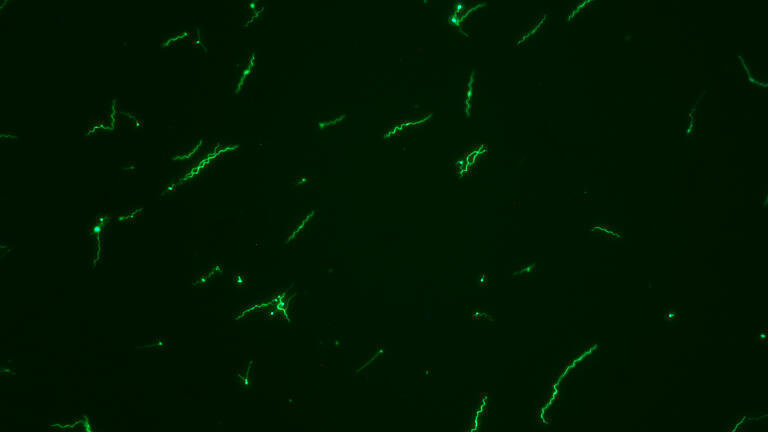
Scientists at the Medical University of Vienna have advanced understanding of the mechanism of infection behind Lyme borreliosis , a tick-born disease which can cause lasting health problems.
As part of the study, a team led by Margarida Ruivo and Michiel Wijnveld from MedUni Vienna's Center for Pathophysiology, Infectiology and Immunology focused on the restriction-modification system (RMS) of Borrelia, the bacteria’s protective mechanism.
"Our aim was to characterise the RMS of Borrelia afzelii and Borrelia garinii, the main pathogens of Lyme borreliosis in Europe, and to understand its importance for the survival of these bacteria during infection of the host," said study leader Michiel Wijnveld.
The team discovered that the methylation of DNA, a process in which small molecules are bound to the bacteria’s own DNA, played an important role in the bacteria’s capability to fight foreign DNA. Further investigations showed that the ability of bacteria to take up new genetic material stably, can be significantly improved by pre-methylating DNA molecules to mimic the Borrelia’s own DNA. This provides a tool to investigate how borrelia sustains itself within a host such as a human and a possible, previously unknown approach for researching and developing new therapies against Lyme borreliosis that are not based on antibiotics.
The researchers are considering phage therapy, in particular, as an alternative treatment method. This involves using so-called bacteriophages, i.e. viruses that attack bacteria, to combat the pathogens specifically. "With further research, this method has the potential to pave the way towards reducing our reliance on antibiotics and preventing the development of antibiotic resistance," says Wijnveld.
Lyme borreliosis is the most common tick-borne disease in Europe. Borrelia bacteria are transmitted to humans when infected ticks bite. Recent studies from the same research group at MedUni Vienna have shown that every fourth tick is carrying Borrelia in Austria, where up to 70,000 new cases are estimated to occur each year.
Treatment with antibiotics is best started as soon as possible after diagnosis of Lyme borreliosis. If the bacterial infection is not recognised in time, it can lead to serious complications such as heart and joint inflammation, neurological complications and persisting symptoms after treatment. There is currently no vaccination against Lyme borreliosis. Contrary to the still widespread opinion, a vaccination against TBE does not protect against Lyme borreliosis.
The research ‘Optimizing transformation efficiency in Borrelia: Unravelling the role of the restriction-modification system of Borrelia afzelii and Borrelia garinii; was published in International Journal of Molecular Sciences.
More information online
ILM 51.6 Sept 2026




 Product directory


















,-photo-Karin-Allander.jpg)