Research news
A surprising new study [1] suggests that the gut may play a role in childhood migraine, offering a potential new avenue for relief. Researchers at National Taiwan University Hospital found that improving gut health could help reduce the frequency and intensity of headaches in some children.
For young patients and their families, migraine is more than just a headache. Recurrent pain can disrupt school, limit daily activities, and place emotional strain on both children and caregivers. While migraine is typically viewed as a brain-centred condition, many children also experience stomach pain, nausea, or other digestive issues - prompting scientists to investigate the role of the gut.
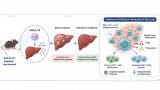
The research team compared the gut bacteria of children with migraine to that of healthy peers and found clear differences. Children with migraines had lower levels of certain beneficial bacteria, particularly those linked to gut balance and inflammation control.
To explore whether these differences could influence migraine pain, the researchers conducted follow-up studies in animal models. Introducing specific beneficial bacteria reduced nerve activity associated with migraine-like pain, suggesting a direct connection between gut microbes and headache pathways.
Encouraged by these findings, the team ran a small pilot study in children. Those receiving probiotic supplementation experienced fewer headache days and lower pain intensity. While probiotics are not a replacement for standard migraine treatments, the study highlights a promising new direction: managing childhood migraine by supporting gut health.
“This research showed a striking link between gut health and migraine severity,” said Associate Professor Pi-Chuan Fan, first author of the study. “Children with digestive symptoms tended to have more disabling headaches, suggesting migraine involves the whole body, not just the brain.”
Professor Huey-Ling Chen, corresponding author, added, “Supporting gut health could become part of a more holistic, child-friendly approach to migraine care, especially for children who also suffer from digestive problems.”
The study, published in Gut Microbes, points toward a future where gut-based strategies complement traditional migraine therapies, offering gentle, supportive approaches to improve quality of life for children living with this often-debilitating condition.
More information online
ILM 51.6 Sept 2026




 Product directory




















,-photo-Karin-Allander.jpg)