Research news
A team of scientists at National Taiwan University has developed a gene therapy approach that not only suppresses liver tumours but also leaves behind long-lasting immune cells that could help prevent the cancer from returning.
The treatment focuses on hepatocellular carcinoma (HCC), the most common type of liver cancer and one that remains particularly difficult to treat with immunotherapy. Because the liver naturally dampens immune responses to avoid inflammation, tumours can exploit this environment to grow largely undetected by the immune system.
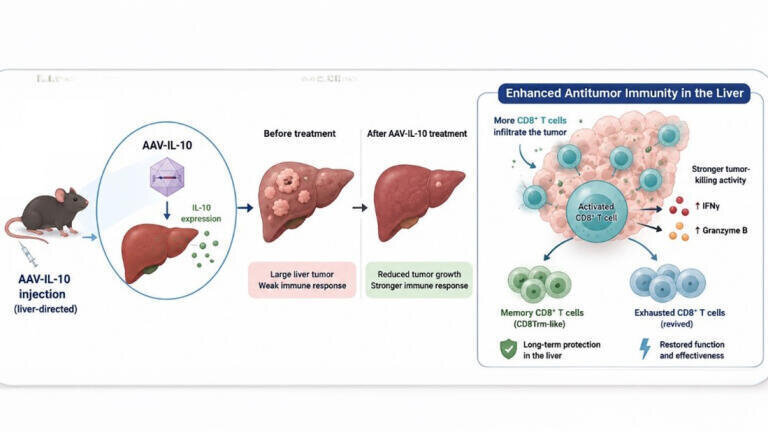
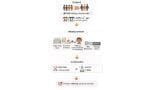
To overcome this barrier, the researchers engineered an adeno-associated virus (AAV) to carry the gene for interleukin-10 (IL-10) directly into liver tissue. This allowed the liver to continuously produce IL-10 locally, avoiding the need for repeated injections of therapeutic proteins.
In mouse models of liver cancer, the therapy sharply reduced tumour growth and triggered a much stronger immune response inside the liver. The findings [1], published in the Journal for ImmunoTherapy of Cancer, showed a significant increase in cancer-killing CD8+ T cells within tumours, together with elevated levels of interferon-gamma and granzyme B, both essential for attacking malignant cells.
The researchers also identified a population of tissue-resident memory-like CD8+ T cells that persisted in the liver after tumours had disappeared. These cells are thought to provide long-term immune surveillance and could help guard against future tumour recurrence.
Importantly, the immune activation remained largely confined to the liver itself rather than triggering widespread systemic immune effects, potentially offering a safer and more targeted treatment strategy.
“Our study demonstrates that targeted delivery of IL-10 can reshape the liver immune environment and enhance the body’s ability to fight liver cancer,” said corresponding author Dr Ya-Hui Chuang, Professor of Clinical Laboratory Sciences and Medical Biotechnology.
More information online
ILM 51.6 Sept 2026



 Product directory



















,-photo-Karin-Allander.jpg)





.jpg)
