Research news
Researchers at National Taiwan University have identified a previously unrecognised role for mechanosensitive CB1 receptors in driving vascular inflammation, uncovering a potential new strategy for preventing atherosclerosis.
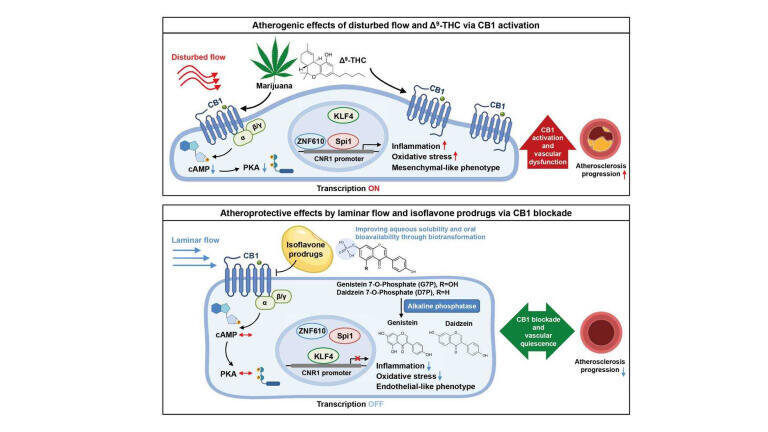
The study [1], published in the Journal of Biomedical Science, shows that abnormal blood flow can trigger the activation of CB1 receptors in endothelial cells, setting off inflammatory processes that contribute to vascular dysfunction and plaque formation.
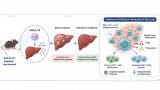
The team found that CB1 receptors are significantly upregulated in both human and mouse atherosclerotic lesions, as well as in endothelial cells exposed to disturbed blood flow. This response is regulated by key transcription factors including KLF4, Spi1 and ZNF610.
Building on this discovery, the researchers identified the soy isoflavone daidzein as a potential CB1 antagonist. To enhance its therapeutic potential, they developed two water-soluble prodrugs - genistein 7-O-phosphate (G7P) and daidzein 7-O-phosphate (D7P) - designed to improve bioavailability and drug performance.
In preclinical models, both pharmacological and genetic inhibition of CB1 reduced endothelial inflammation, oxidative stress and endothelial-to-mesenchymal transition. Oral administration of the prodrugs also significantly reduced atherosclerotic plaque formation in mice.
Professor Tzu-Tang Wei, corresponding author of the study, said the findings highlight endothelial CB1 as a key mechanosensitive driver of vascular disease, adding that soy-derived compounds could offer a promising oral approach to tackling atherosclerosis.
The work points to a new therapeutic avenue targeting blood flow–induced endothelial dysfunction, potentially shifting treatment strategies beyond conventional lipid-lowering and anti-inflammatory approaches.
More information online
ILM 51.6 Sept 2026



 Product directory

















,-photo-Karin-Allander.jpg)




.jpg)
