
Research news
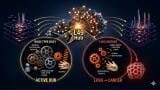
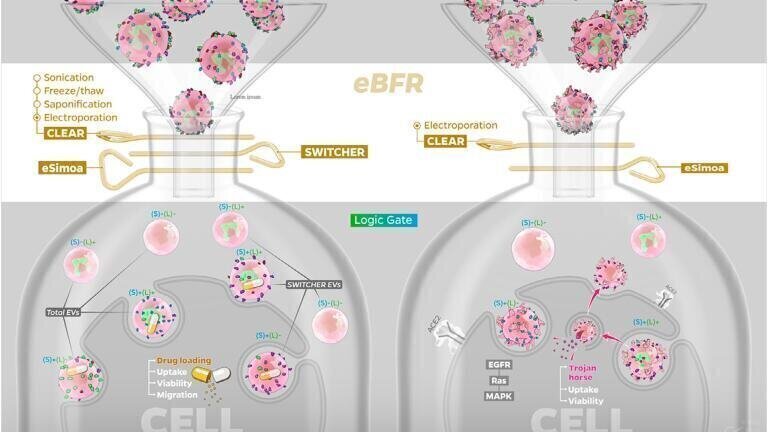
Researchers at National Taiwan University have developed a modular platform that transforms tumour-derived extracellular vesicles (EVs) from cancer messengers into programmable nanocarriers for drug delivery. EVs are microscopic particles secreted by cells, carrying molecules that can influence their environment - in cancer, they often promote tumour growth and suppress immune responses. Until now, teasing apart their internal and surface components to understand their function has been a major challenge. Their findings [1], recently published in Advanced Functional Materials, open a new path for engineering EVs as intelligent nanocarriers for cancer therapy.
The team, led by Dr Chi-An Cheng, created the EV Bimodal Functional Regulator (eBFR) platform, which dissects EVs with unprecedented precision. CLEAR removes harmful internal cargo while preserving the vesicle’s surface, SWITCHER gently isolates EVs bearing specific surface proteins, and eSimoa provides high-resolution profiling down to single-molecule detail. Together, these methods allow EVs to be studied and engineered with spatial, functional, and quantitative resolution.
Using this approach, the researchers were able to reprogram EVs as biocompatible drug carriers. In preclinical models, the modified vesicles carried larger drug payloads and showed enhanced anti-tumour efficacy compared with unmodified EVs. The work demonstrates how careful structural mapping at the micro- and nano-scale can guide functional engineering, turning a once-dangerous cellular messenger into a therapeutic tool.
“This platform lets us see EVs in a completely new way and reshape their function,” said Dr Cheng. The study not only advances understanding of EV biology but also establishes a blueprint for next-generation therapies that are both safe and highly targeted.
More information online
ILM 51.6 Sept 2026




 Product directory



















,-photo-Karin-Allander.jpg)