Research news
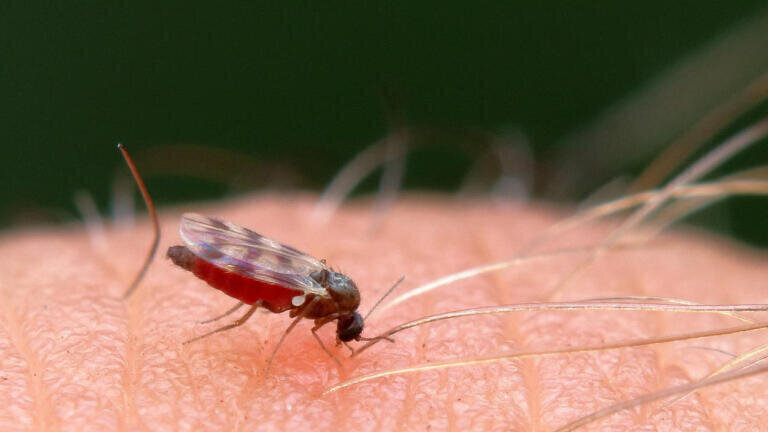
New research [1] from Queen’s University Belfast shows that biting midges - the insects responsible for spreading bluetongue virus - can survive far colder temperatures than previously thought, shedding light on how the virus may overwinter and trigger outbreaks.
Published in the Journal of Medical Entomology, the global study, in collaboration with The Pirbright Institute, is the first to quantify cold tolerance across all life stages of Culicoides midges, from eggs and larvae to pupae and adults.
The experiments revealed that midge eggs survived temperatures as low as −18°C, the lowest the researchers could test - and possibly even colder - highlighting a previously underestimated resilience in these disease vectors. Midges are capable of transmitting several economically significant livestock viruses, including bluetongue, African horse sickness, and Schmallenberg virus.
Lucy Devlin, a PhD researcher at Queen’s, said:
"Our findings show that these midges can survive through even the coldest months, at temperatures lower than expected. This is particularly relevant following the re-emergence of bluetongue in northern Europe and the first recorded outbreak in Northern Ireland in late 2025. Given the region’s high livestock density and reliance on farming, even small outbreaks could have significant economic impacts."
The study provides critical data for improving vector-borne disease forecasting models and refining climate-disease risk assumptions.
Dr Ross Cuthbert from Queen’s added:
"By pinpointing which life stages are most cold-tolerant, we can better understand how midges overwinter. This knowledge supports surveillance strategies, informs preparedness planning, and ultimately helps protect livestock, farmer livelihoods, and food security across the UK and Europe."
Funded by DAERA Northern Ireland and BBSRC, the research was a collaboration between Queen’s, The Pirbright Institute, and the Agri-Food and Biosciences Institute (AFBI).
More information online
ILM 51.6 Sept 2026




 Product directory


.jpg)
.jpg)
















,-photo-Karin-Allander.jpg)