Research news
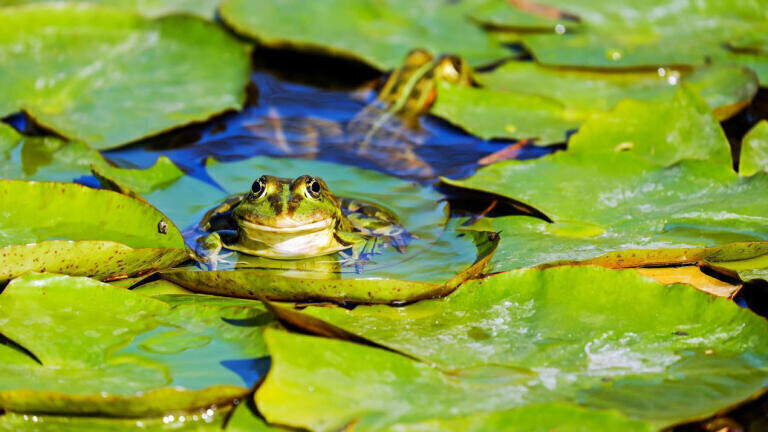
`A global study [1] led by Queen’s University Belfast has revealed that tropical amphibians are beginning to resist one of the deadliest wildlife diseases ever recorded.
Chytridiomycosis, caused by the fungus Batrachochytrium dendrobatidis (Bd), has devastated amphibian populations worldwide, driving dramatic declines and extinctions of frogs, toads, newts, and salamanders. The disease has accelerated amphibian loss at rates higher than for most other organisms on Earth, making it a key driver of global biodiversity decline.
Published in Global Change Biology, the research analysed historical and recent infection data from thousands of amphibian species across tropical and colder regions. The study found that while tropical species are showing signs of stabilising, amphibians in colder climates remain highly vulnerable.
Dr Daniel Pincheira-Donoso, principal investigator from Queen’s School of Biological Sciences, explained: “Chytridiomycosis has long been seen as the main cause of rapid amphibian declines. By compiling a global database covering threatened and non-threatened species alike, we now see that tropical amphibians are bouncing back, whereas colder-climate species are still experiencing ongoing declines.”
He added: “In colder regions, seasonality and lower amphibian densities may have acted like ‘natural lockdowns,’ slowing both disease spread and the evolution of resistance. In contrast, tropical species, once hardest hit, appear to have developed tolerance, suggesting that coexistence with Bd is possible.”
Luke Goodyear, a PhD researcher at Queen’s who led the study, commented: “Our findings show two contrasting patterns. In the tropics, populations are showing early signs of recovery, while in Europe and other cooler regions, the impact of Bd is still increasing. These insights could help target conservation efforts where they are needed most, before declines become irreversible.”
The research highlights region- and climate-specific dynamics of amphibian declines, offering hope that some species may stabilise or recover after severe population losses.
More information online
ILM 51.6 Sept 2026



 Product directory


.jpg)
.jpg)













,-photo-Karin-Allander.jpg)