Research news
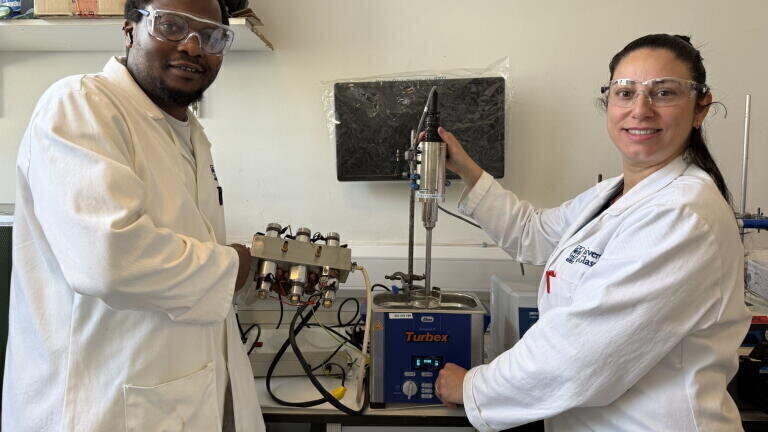
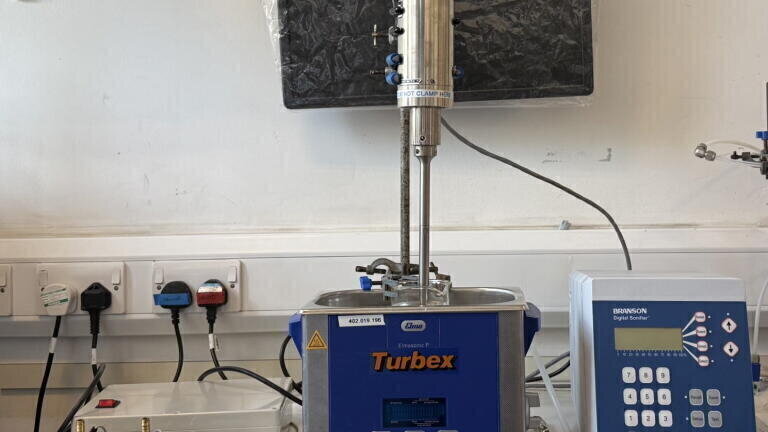
Researchers at the University of Glasgow have developed a new ultrasound-based method for removing a common plastic-derived pollutant, Bisphenol A (BPA), from water - without adding any chemicals.
The innovative system uses a dual-frequency ultrasound technique to generate high-energy microscopic bubbles in contaminated water. As these bubbles collapse, they create extreme temperatures and pressures, forming reactive ‘hot spots’ capable of breaking down BPA into harmless byproducts like carbon dioxide.
In lab-scale trials, the method achieved 94% BPA degradation in just 40 minutes and delivered a 67% reduction in chemical oxygen demand (COD) - a key indicator of water quality.
Unlike traditional methods that rely on activated sludge or carbon absorption - both of which require further disposal of BPA-laden materials - this technique destroys the contaminant at the molecular level. Previous attempts to use ultrasound for pollutant removal often required additional chemicals or catalysts. The Glasgow system needs neither, making it both simpler and cleaner.
BPA is widely used in plastic manufacturing, with over 10 billion kilograms produced globally each year. Though its use in food packaging and consumer products is declining, decades of widespread application have left persistent traces in water supplies worldwide. BPA is known to disrupt hormone function and has been linked to developmental and health issues.
Lead author Shaun Fletcher said:
“Our dual-frequency system shows that ultrasound alone can break down BPA effectively, without needing extra steps or materials. It’s a clean, direct solution.”
Dr Lukman Yusuf, co-author, added:
“We’re building on earlier work that showed similar success with other pollutants like methylene blue. The goal now is to adapt this for broader applications, including ‘forever chemicals’ like PFAs.”
The team is currently scaling up the prototype and in discussions with water companies about industrial applications. Future use cases include treating wastewater before discharge or integrating the technology into municipal water treatment systems.
The research, led by Professor Mark Symes and funded by EPSRC, the Royal Society, and the University of Glasgow, demonstrates the potential of dual-frequency ultrasound for degrading environmental pollutants like bisphenol A (BPA).
Symes explained:
“Ultrasound won’t replace conventional treatment — but for targeted contaminants like BPA, its potential is extraordinary.”
Co-author Dr Zeliha Ertekin contributed to the study, which appears in the journal Ultrasonics Sonochemistry under the title ‘Sonochemical degradation of bisphenol A: A synergistic dual-frequency ultrasound approach’.
More information online
ILM 51.6 Sept 2026



 Product directory



















,-photo-Karin-Allander.jpg)







.jpg)
