Liquid handling
Titan Enterprises shares practical insights to help engineers and operators tackle the complexities of precision liquid batching for accurate, repeatable results and efficient process control.
At first glance, metering batches of liquid might appear simple - install a flowmeter, connect a control instrument, wire in a valve, enter the volume, and dispense. Yet in real-world applications, a host of factors can affect precision and repeatability, making liquid batching far more demanding than it seems.
Modern processing systems require highly accurate flow measurement, whether adding water to food mixers, dispensing flavourings to beverages, or handling aggressive chemicals. Even small inconsistencies in system design can lead to costly inaccuracies and process disruption.
For batching applications, repeatability is key - ensuring the correct volume is dispensed every time. Maintaining stable process conditions helps, but it’s not always possible. Temperature fluctuations can alter viscosity and volumetric flow, while changing feed tank levels can affect dispensing rates. To address this, batching systems should be designed to minimise as many variables as possible within a reasonable budget, selecting flow meters, pumps, and valves that can handle any necessary adjustments.
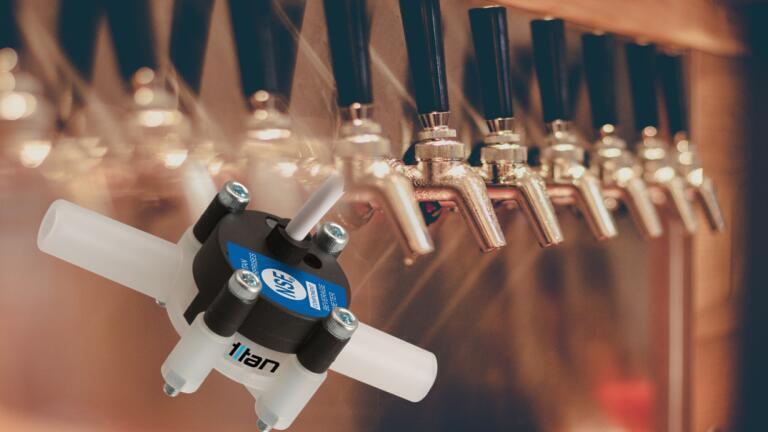
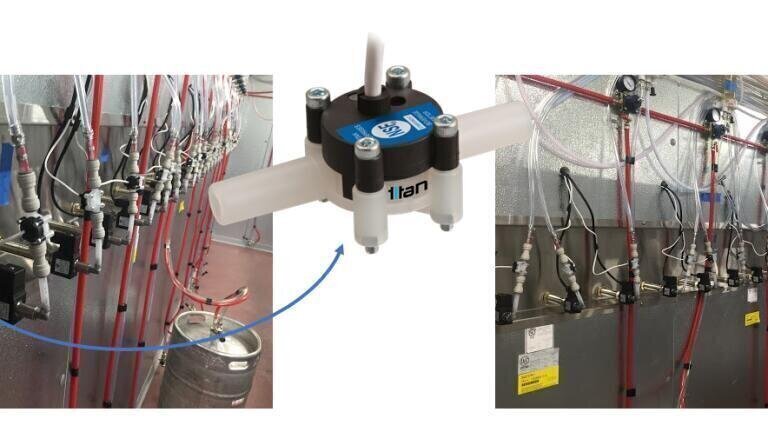
Titan’s NSF-Approved Beverage Flowmeter is one example of a solution tailored for the drinks market. Known for its reliability and repeatability, this low-cost device is widely used in applications ranging from beverage production lines to self-pour beer walls in bars and restaurants.
Typical batch flow measurement applications include juice processing, where precise metering of water, flavourings, and sweeteners ensures product consistency. In beer dispensing systems, flowmeters monitor and control pours, preventing waste and maintaining profitability. In bottling operations, flow switches and meters detect flow loss and manage critical functions like CO₂ control and refrigerant protection.
Key considerations for effective batching systems include maintaining hydraulic stability, avoiding pulsating flows, ensuring stable conditions, and selecting appropriately calibrated equipment. The correct placement of flowmeters, understanding resolution needs, and using fast-acting valves or overrun compensation software further enhance batching precision.
By addressing these factors at the design stage and selecting fit-for-purpose metering technology, engineers can optimise process performance and achieve dependable, high-accuracy liquid batching.
More information online
ILM 51.6 Sept 2026



 Product directory





















.jpg)
