Mass spectrometry & spectroscopy
Published over 7 years ago. See the latest and most current information on Mass spectrometry & spectroscopy.
Labmate’s latest series focuses on some of the most influential women in physics. Following Professor Alessandro Strumia’s presentation at Cern, during which he claimed that physics was ‘invented and built by men’, we’re going to be taking a look at just a few of the women who prove him wrong.
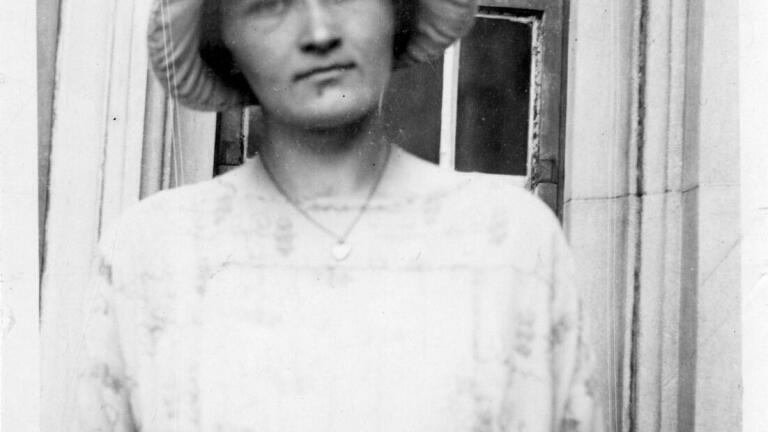
Today, we’re focussing on Cecilia Payne-Gaposchkin – the woman who discovered what the sun was made of.
Born in England in 1900, Cecilia was one of three children raised solely by their mother, after her father died in 1904. Age 19, she won a scholarship to attend Cambridge University, studying botany, physics and chemistry. Her interest in astronomy was inspired by a lecture by Arthur Eddington.
Even at a young age, Cecilia released that her prospects were slim in England, with only teaching jobs available for women. So, she made the move across to America, meeting Harlow Shapely, the director of the College observatory at Harvard.
Harlow persuaded Cecilia to write a doctoral dissertation, making her the first person to earn a PhD in astronomy from Radcliffe College. Her thesis, focusing on stellar atmospheres, is widely regarded as one of the best and most influential theses in astronomy.
Cecilia worked at Harvard for many years, becoming the first woman to be promoted to full-time professor in her faculty. Later, she was also appointed Chair of the Department of Astronomy, making her the first woman to lead a department at Harvard.
She eventually retired from teaching in 1966 but stayed on as a member of the Smithsonian Astrophysical Observatory at Harvard for many years.
In her thesis, Cecilia accurately related the classes of stars to their temperatures, by applying the ionisation theory. More importantly, she discovered that helium and hydrogen were vastly more present in the Sun and other stars. She argued that hydrogen is the most abundant element in the universe.
Before presenting her PhD and conclusion, Henry Russell persuaded her not to suggest that the Sun is mostly made up of hydrogen, as it contradicted the widely believed theory of the time. However, four years later Henry conducted his own study and published a paper regarding the composition of the sun.
Henry acknowledged Cecilia’s work in his paper, but he is often credited for the discovery and Cecilia was never given the proper credit she deserved.
Cecilia is just one of many intelligent, inspirational women in physics. Take a look at our previous posts on Lise Meitner, Maria Goeppert-Mayer and Katherine Johnson to discover more about the leading women and be sure to check in for our upcoming post about the first female Nobel Prize winner, Marie Curie.
Want to find out more about laboratory developments more recently? Take a look at the article, ‘Determining Hazardous Substances at Arm’s Length’.
ILM 51.6 Sept 2026


 Product directory


.jpg)
.jpg)