Microscopy & microtechniques
Published over 16 years ago. See the latest and most current information on Microscopy & microtechniques.
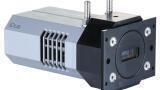
With the help of a highly sensitive Andor iXon+ EMCCD camera, US researchers have developed a super-resolution, 3D imaging technique that can resolve single fluorescent molecules with greater than 10 times more precision than conventional optical microscopy. By being able to locate molecules to within 12 – 20nm in all three axes, the researchers hope to be able to observe interactions between nanometer-scale intracellular structures previously too small to see.
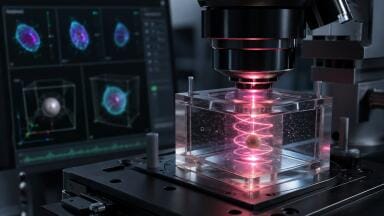
This major advance in 3D super-resolution imaging has been achieved by combining two concepts: super-resolution imaging by sparse photoactivation of single-molecule labels (PALM, STORM, F-PALM), coupled with a double-helix point spread function (DH-PSF) to provide accurate z-position information.
Professor Rafael Piestun at the University of Colorado and his students developed a PSF with two rotating lobes where the angle of rotation depends on the axial position of the emitting molecule. This means the PSF appears as a double helix along the z-axis of the microscope, lending it the distinctive name of ‘Double Helix PSF’. Professor W. E. Moerner at Stanford University and his team realised that the DH-PSF could be used for super-resolution imaging with single molecules. With the DH-PSF, a single emitting fluorescent molecule emits a pattern corresponding to a standard PSF, but the image this creates is convolved with the DH-PSF using Fourier optics and a reflective mask outside the microscope. At the detector, the image from a single molecule appears as two spots, rather than one. The orientation of the pair can be used to decode the z-location of a molecule, which combined with the 2D localisation data, enables the 3D position to be accurately defined. Furthermore, the DH-PSF approach has been shown to extend the depth of field to ~ 2 μm in the specimen, approximately twice that which has been achieved in other 3D super-resolution techniques
ILM 51.6 Sept 2026





 Product directory