Microscopy & microtechniques
Published over 12 years ago. See the latest and most current information on Microscopy & microtechniques.
Scientists in Hawaii have announced that they have almost managed to remove the Y chromosome from DNA completely. So far the scientists have successfully condensed all of the genetic information that is usually held within the male chromosome within mice down to just two genes. They believe that they might be able to fully remove it from their DNA altogether.
Published in the journal 'Science', the study reveals that the mice with the condensed chromosomes were still able to be biological fathers, although they did need advanced In vitro fertilisation (IVF) in order to do so. The scientists have suggested that the research could be beneficial in the future to men that have a damaged Y chromosome and who are infertile.
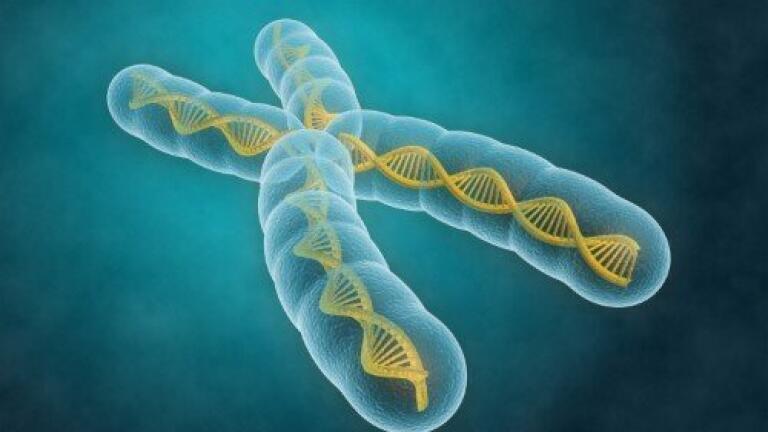
Chromosomes are ultimately bundles of DNA, with one pair acting as the sex chromosomes within the majority of mammal species. The gender of a child is determined by the sex chromosomes that they inherit from their parents. Two X chromosomes mean that a foetus will be a female, while have both X and Y means that it will be a boy.
Generally mice have 14 different distinct genes within their Y chromosome, which can be present in up to 100 copies. The scientists found that modifying the Y chromosomes to just two genes still saw the mice develop normally, suggesting that the Y chromosome could be removed completely.
Professor Monika Ward, lead researcher on the study, told the BBC: "These mice are normally infertile, but we show it is possible to get live offspring when the Y chromosome is limited to just two genes by using assisted reproduction."
Although the mice only have the ability to produce limited sperm, this could be used to help them conceive via IVF that injects the sperm's genetic information directly into a female egg. The resulting babies were found to be entirely healthy and able to live a full lifespan as would be expected in mice that are conceived naturally.
ILM 51.6 Sept 2026





 Product directory