Microscopy & microtechniques
Published over 16 years ago. See the latest and most current information on Microscopy & microtechniques.
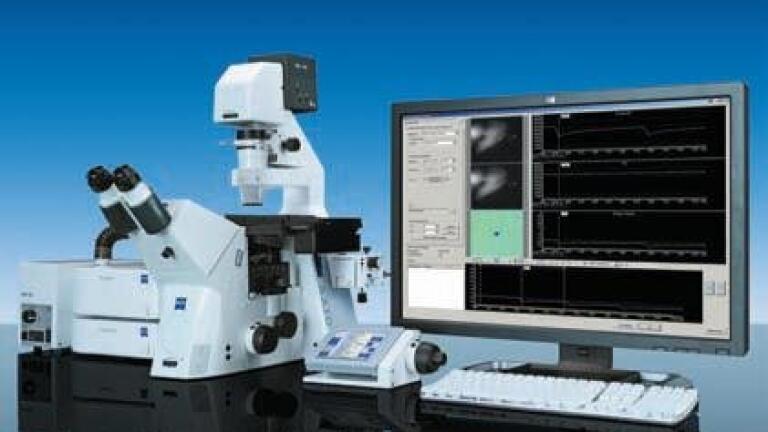
Much of our understanding of the structural organisation of the living cell has come about through recent advances in fluorescence labelling of target molecules and laser scanning microscopy. With the release of DirectFRAP from Carl Zeiss, scientists can now make similar strides in probing the dynamics of membrane transport and the movement of molecules within the living cell.
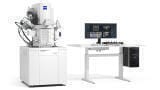
FRAP, FLIP, photoactivation, conversion of Dendra, on-off switching of Dronpa and other photomanipulation techniques, use a combination of intense pulses of laser light and widefield epi-fluorescence observation to measure the movement of fluorescent markers within the cell. Fitted to the Carl Zeiss Axio Observer microscope, DirectFRAP overcomes the dynamic compromises inherent in previous systems by eliminating the link between laser intensity and the size of the ROI, allowing simultaneous photo-manipulation across the entire area and first image acquisition in as little as two milliseconds. The precise millisecond control of the laser pulses is achieved by acousto-optic tuneable filters (AOTFs) and the system is notable for its brilliant image formation at high acquisition rates and a wide observation field in fast experiments.
Flexible diaphragm options enable a high level of flexibility during experiments and DirectFRAP has been designed to be used in combination with other Carl Zeiss imaging systems, such as the Laser TIRF 3 or Cell Observer SD (Spinning Disc). These system combinations permit the observation of processes in a single Z plane and are ideal for the examination of the smallest cell structures. The same lasers can be used simultaneously for DirectFRAP and Laser TIRF 3 or Cell Observer SD. With all systems, laser pulse control and data acquisition is performed by the ZEISS AxioVision software.
ILM 51.6 Sept 2026





 Product directory