News
Published over 14 years ago. See the latest and most current information on News.
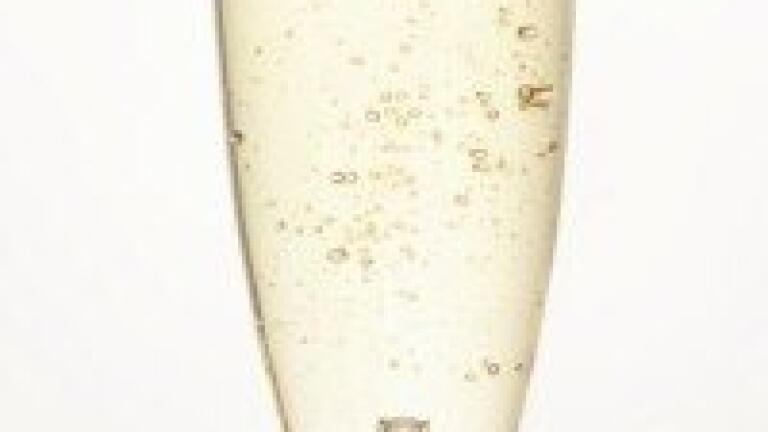
A French physicist has completed 15 years of research on the physics of bubbles and foam in champagne and sparkling wine, popping the cork on many secrets from the popular fizzy beverage.
Gérard Liger-Belair’s started his pursuit looking into the physics of bubbles and foam in champagne 15 years ago when he received approval from Moët & Chandon and the University of Reims in Champagne-Ardenne to conduct research in the previously unexplored area.
He is now head of the 'bubble team' at the university's laboratory of oenology, although his success has not come without troubles en-route. He spent a lot of time gathering information on the underlying bubble physics and bringing it to the beverage world. When looking into the physics, using high-speed photography and high-speed video cameras, he gradually learnt that from each nucleation on the glass wall, to its bursting at the liquid surface, the bubble process was extremely complex.
Mr Liger-Belair uncovered ways of making smaller bubbles in champagne, which are considered desirable by consumers. To do this, he spent time developing mathematical models that reproduce the growth of bubbles, finding that "one of the main parameters that explains the growth of bubbles is the concentration of dissolved CO2 in the champagne," he explained. He introduced a procedure based on this model which many champagne manufacturers now use to produce smaller bubbles.
He also uncovered the role bubbles play on smell, finding that when they reach the surface they undergo an evaporation process, which transfers aroma into the vapour phase so that they can be smelt by the consumer. Another way bubbles impact taste is in pain receptors for CO2, with high levels impacting the perception of taste and aroma.
The researchers at University of Reims will continue to explore the physics of bubbles through a range of laboratory techniques as they unlock huge amounts of information.
Posted by Fiona Griffiths
ILM 51.6 Sept 2026



 Product directory















.jpg)
,-photo-Karin-Allander.jpg)