News
Published over 11 years ago. See the latest and most current information on News.
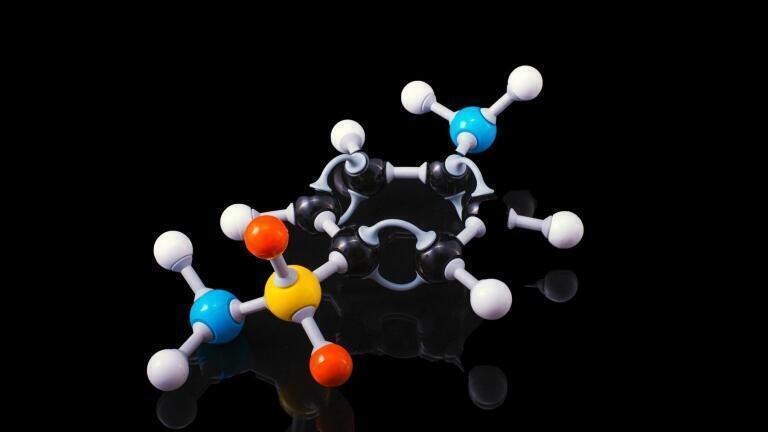
Molecules are incredible things that have infatuated scientists for decades. As the smallest particle in a chemical element or compound, they are made up of atoms that are fused together by chemical bonds that form when electrons share or exchange among atoms. Now, researchers have reached new heights and managed to build a molecule for the very first time in scientific history! The recent atomic bonding breakthrough was published in the Physical Review Letters journal and outlined how a team of scientists used laser beams to influence the path of chemical processes. It marks an exciting new era of advancement for photochemistry.
Christiane Koch, lead researcher explains, “The energy absorbed from the pulse leads to a rearrangement of the atoms' electrons, resulting in a chemical bond… We hope that these accomplishments will motivate other groups to look again into the coherent control of chemical reactions and thus revive the field.”
So how did they do it? Amazingly, laser beams played an integral role in the experiment’s success. For decades scientists have been using light to regulate atomic bonding, a process referred to as coherent control. However while laser pulses were used to successfully break bonds, creating them remained unconquered. That is until researchers from Israel's Hebrew University, the Technion-Israel Institute of Technology and Germany’s University of Kassel managed to successfully pull off the feat.
Using short pulses of light the researchers were able to create magnesium dimer Mg2 in a group of magnesium atoms. By adjusting the shape of the pulse the scientists were able to successfully increase the number of molecules that formed. To solve the problem of pinpointing the bond creation process lasers were fired at a small group of atoms for a millionth of a billionth of a second. This miniscule measurement of time is also known as a femtosecond. According to APS Physics the new technology could eventually be used to "slice and weld molecular pieces into a desired end product.”
Light is used to support a plethora of scientific experiments. In the article ‘Near-infrared Light Triggers Targeted Drug Release Without Harming Tissue’ writers look at how the precisely controlled release of capsule contents can be used to enrich a variety of areas including self-healing materials, nutrient preservation, fragrance release and drug delivery. Light-triggered activation is particularly attractive to this field of biological research as it fosters remote release and highly spatiotemporal resolution.
Lab Asia 33.4 - August 2026
 Product directory