News
Published over 10 years ago. See the latest and most current information on News.
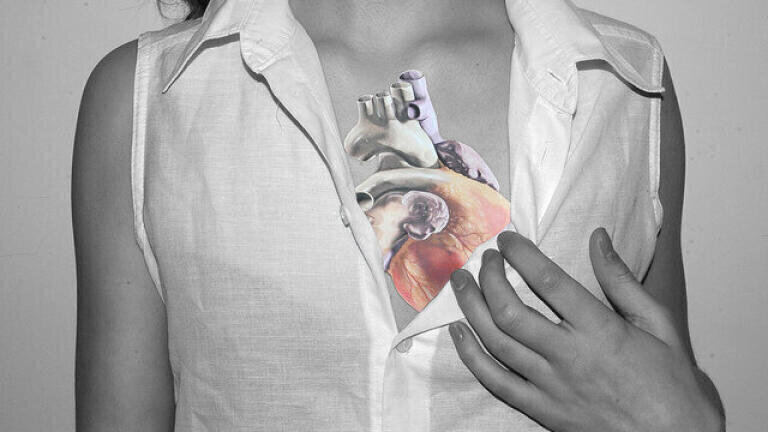
In a feat that could completely revolutionise the medical sphere, doctors have developed an amazing new transplant method capable of keeping a human heart beating inside a machine. The machine has been officially named the ‘Organ Care System’ and is able to keep lungs breathing and maintain kidney urine production, all external to the human body. The entire process has been captured on camera and has created quite the buzz, both online and in hospitals.
The cutting edge device was developed by US based medical device company, TransMedics. Engineers assert that at present it’s the world’s only portable medical device that doesn’t rely on cold storage for multiple organ transplantation. Dr. Waleed Hassanein, President and CEO of TransMedics, Inc. explains that for the medical sphere, the device could play an integral role in increasing the pool of viable heart donors.
“We are dedicated to expanding the use of donor organs to result in successful transplantation using our breakthrough OCS™ platform and are actively engaged in 4 large pivotal trials for hearts, lungs and livers in the U.S. to bring the revolutionary OCS™ technology to the U.S. market hopefully very soon,” states Hassanein in a press release.
Experts are predicting that the state of the art device will save millions of lives across the globe. Essentially, the ultra-advanced machine is able to keep donor organs alive even after they’ve been extracted from the body. For doctors and surgeons this allows them a much longer period of time to work on the extracted organs before being placed in a recipient’s body.
Already the device has been successfully used to help patients undergo successful transplants. Lee Hall is one of the first individuals to benefit from the technology, undergoing a high-tech transplant at Harfield Hospital.
Hall says, “It was touch and go for me, they said they had a heart for me but it was coming from a different to normal source – and that it would be revived in a ‘special box.’ "I said I didn’t care as long as it allowed me to see my son again.”
Science and anatomy go hand in hand, and articles such as Speeding up Research into Clotting and Bleeding offer readers a fascinating glimpse at how medical scientists are using new technologies to develop detection methods for thrombosis and bleeding.
Images via Flickr Creative Commons. Credits: Charlotte Astrid
Lab Asia 33.4 - August 2026
 Product directory