
News
Published over 12 years ago. See the latest and most current information on News.
A new study has suggested that innovation in drugs may happen outside of the traditional academic setting. Protein crystallisation research from the University of Alabama at Birmingham has demonstrated that the secret could be in space.
Lawrence DeLucas, OD, PhD, director of the Center for Biophysical Sciences and Engineering said that the human body contains many proteins, which are known to be connected to a number of diseases.
It is the atomic structure and function of these proteins that scientists could be able to begin to develop compounds that can "interact" with them and "subsequently regulate [their] function".
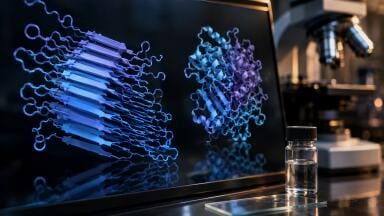
However, in order to discover the structure of a protein, researchers must experiment with solutions to find which allow crystal formation. Studies have shown proteins in space have demonstrated the ability to grow crystals far bigger and with higher quality than those found in laboratories.
The process of analysing protein crystals includes x-ray diffraction, where crystal formation is subjected to an x-ray beam. This creates a pattern of all the amino acids present in the protein, which scientists are then able to use to develop new drugs. This method of innovating new drug structures, often referred to as structure-based drug design, has contributed to development of a number of drugs used in the treatment of cancer, HIV, diabetes, and other chronic and infectious diseases.
Dr DeLucas, a former Space Shuttle mission specialist, has worked with a research team to demonstrate the benefits of microgravity on protein crystallisation. There are nearly 100 proteins prepared for crystallization experiments scheduled for the launch of the SpaceX-3 rocket to the International Space Station (ISS) on March 16th, where they will remain until August.
Crystal formation on these proteins will be compared to the growth of sets in control experiments at UAB.
The analysis will be performed as a double-blind experiment, as this removes any bias and is a better method for evaluating the results, according to Dr DeLucas. He hopes that this type of study will prove that protein crystallisation experiments benefit from a microgravity environment, encouraging NASA to consider expansion of the programme.
ILM 51.6 Sept 2026

 Product directory












.jpg)
,-photo-Karin-Allander.jpg)




.jpg)