News
Published over 5 years ago. See the latest and most current information on News.
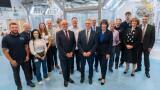
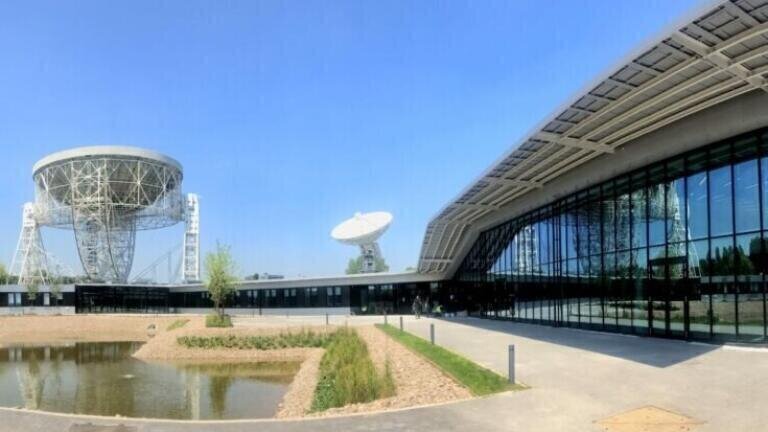
A new era for global radio astronomy was marked by the opening of the Square Kilometre Array (SKA) Observatory on Feb 4, the world’s second intergovernmental organisation to be dedicated to astronomy.
The new observatory, based on the grounds of the Jodrell Bank UNESCO World Heritage Site, was co-funded by the UK government’s Department for Business, Energy and Industrial Strategy (BEIS), which committed at least £100million to the construction of the SKA and the SKA headquarters through the STFC.
UK Science Minister Amanda Solloway said: The SKA Observatory is one of the most ambitious scientific international collaborations of our time which could open up unrivalled opportunities for the world’s leading astronomers.
“Today’s first meeting of the Observatory’s council, headquartered at the UK’s own Jodrell Bank, is yet another pivotal milestone to provide our scientists with access to some of the world’s most sophisticated telescopes, furthering our knowledge of the universe.
Dr. Catherine Cesarsky, appointed first Chair of the SKAO Council, said at the launch: “This is a historic moment for radio astronomy. Behind today’s milestone there are countries that had the vision to get deeply involved because they saw the wider benefits their participation in SKAO could bring to build an ecosystem of science and technology involving fundamental research, computing, engineering and skills for the next generation, which are essential in a 21st century digital economy.
The SKAO, will be responsible for overseeing the construction and operation of the largest and most complex radio telescope networks ever built in a bid to address fundamental questions about our Universe.
SKAO’s telescopes will be based in South Africa and Australia. The South African telescope will be composed of mid-frequency, 15 metre-diameter dishes, while the telescope in Australia will be composed of low-frequency, two-metre-tall antennas.
The creation of SKAO follows a decade of detailed engineering design work supported by more than 500 engineers, over 1,000 scientists and dozens of policy-makers in more than 20 countries.
ILM 51.6 Sept 2026


 Product directory


.jpg)
.jpg)