.jpg)
News
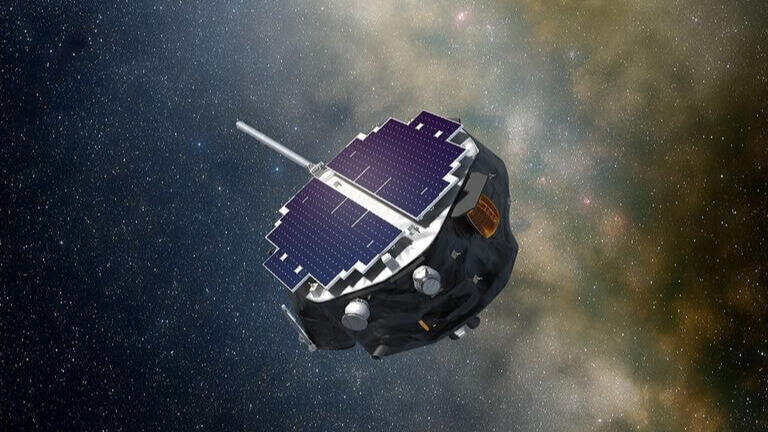
A British-built instrument has launched aboard NASA’s Interstellar Mapping and Acceleration Probe (IMAP), a mission designed to map the vast magnetic bubble that shields our solar system from harmful cosmic radiation.
The spacecraft lifted off from Kennedy Space Center, Florida, on 24 September and will travel nearly a million miles from Earth before beginning its observations. Acting like a ‘space weather station’, IMAP will track the solar wind and high-energy particles, offering new insights into how the Sun interacts with the wider galaxy.
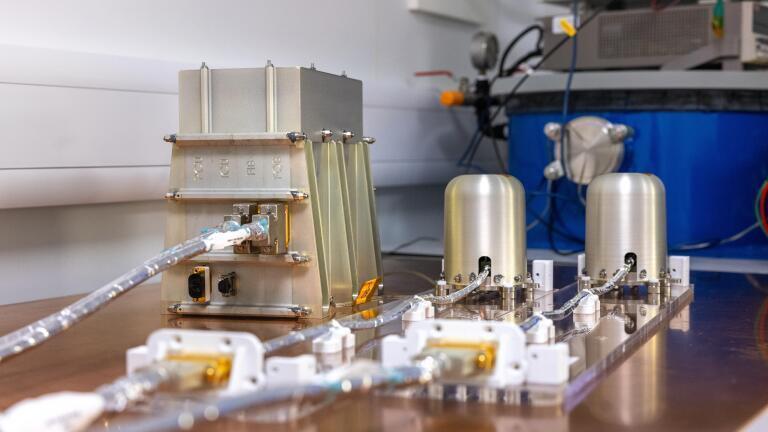
At the core of the UK’s contribution is MAG, a sensitive magnetometer developed by Imperial College London with £4.2 million support from the UK Space Agency. MAG will measure magnetic fields in space, generating real-time data to improve forecasting of solar storms that can disrupt satellites, GPS, and power grids.
Professor Timothy Horbury, Imperial College London, science lead for the instrument, commented: “Our magnetic field instrument will help us understand how particles are accelerated at shock waves and travel through the solar system. The fact that our data will be publicly available within minutes is a great example of science with real benefits for society.”
The UK’s involvement in IMAP builds on the success of Solar Orbiter and reflects the nation’s strong reputation in space science and instrumentation. Alongside NASA, more than 25 institutions across six countries are contributing to the mission, which will also support safer human exploration of the Moon and Mars.
More information online
ILM 51.6 Sept 2026



 Product directory



























.jpg)
