News
Published over 12 years ago. See the latest and most current information on News.
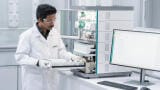
A unique X-ray machine — the world’s first high performance tool dedicated to the study of liquid surfaces — took pride of place at the recent opening of a new research facility at The University of Nottingham’s Nanoscience and Nanotechnology Centre (NNNC).
Eminent German physicist and chemist Professor Dr Hans-Peter Steinrück from Friedrich-Alexander-Universität was guest of honour at the celebration when the Centre’s new X-ray Photoelectron Spectroscopy Suite was unveiled.
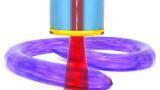
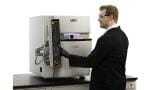
The new Liquid Phase Photoelectron Spectroscopy (LiPPS) machine allows researchers to take atomistic measurements of the surface of liquids in a variety of high-value industrial sectors like semi-conductors, pharmaceuticals, aerospace and automotives.
Director of the NNNC, Professor Andrei Khlobystov, added: “The X-ray Photoelectron Spectroscopy Suite is the gateway to an entirely new area of research because up to now XPS equipment has only allowed analysis of solid substances. LiPPS will secure The University of Nottingham’s leading position in nanotechnology and by providing access to industry and academia, we will maximise the impact of this new instrument on a national and international scale.”
The university’s Professor Peter Licence and his team are credited with the discovery of ionic liquid-based surface science. He said: “The potential applications of this new area of research are vast. Understanding solute composition and interfacial structure is vital in a wide range of processes including catalysts and electrode-related systems. We believe our research could lead to the design of more efficient energy storage and energy conversion devices.”
The suite has been set up as part of a £7.2 million grant from the Engineering and Physical Sciences Research Council. At the event Pro-Vice-Chancellor for Research at The University of Nottingham Professor Saul Tendler said: “We are very proud to welcome Professor Dr Hans-Peter Steinrück to the official opening of this fantastic new facility. He is a world leader in the investigation of the physics and chemistry of surfaces as well as the development of bespoke scientific equipment in this area."
ILM 51.6 Sept 2026

 Product directory







.jpg)
,-photo-Karin-Allander.jpg)