
Sample preparation
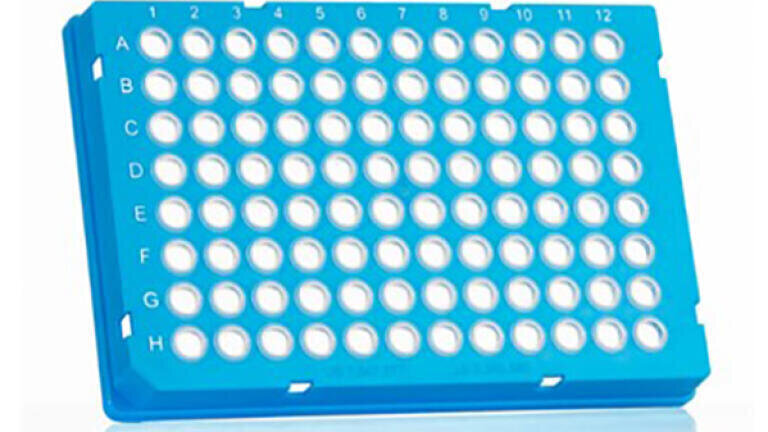
Azenta Life Sciences’ FrameStar® microplates feature a unique two-component design that reduces thermal expansion and sample evaporation, improving PCR and qPCR consistency.
Traditional PCR plates are often made entirely of polypropylene due to its chemical inertness and thin walls, which allow rapid temperature transfer. However, polypropylene plates can suffer from thermal expansion and evaporation, which may compromise applications such as qPCR and Next Generation Sequencing.
FrameStar PCR plates overcome these challenges with a dual-material approach: polypropylene tubes are integrated into a rigid polycarbonate frame. This design stabilises the plate during thermal cycling, minimising distortion and improving seal integrity, which translates into more reliable quantification and consistent results.
A recent study highlights the advantages of the two-component design, showing a significant reduction in evaporation-related errors in qPCR. The reduced risk of sample loss also enables smaller reaction volumes, helping labs save on costly reagents without sacrificing data quality.
FrameStar plates are available in both 96- and 384-well formats. The 384-well plates are optimized for low-volume PCR, while the 96-well options include low and standard profiles with a range of skirt types - non-skirted, semi-skirted, or fully skirted - to suit different thermal cycler requirements. Multiple well-frame colour combinations are also offered for easy sample identification.
More information online
ILM 51.6 Sept 2026



 Product directory





















.jpg)
