Sample preparation
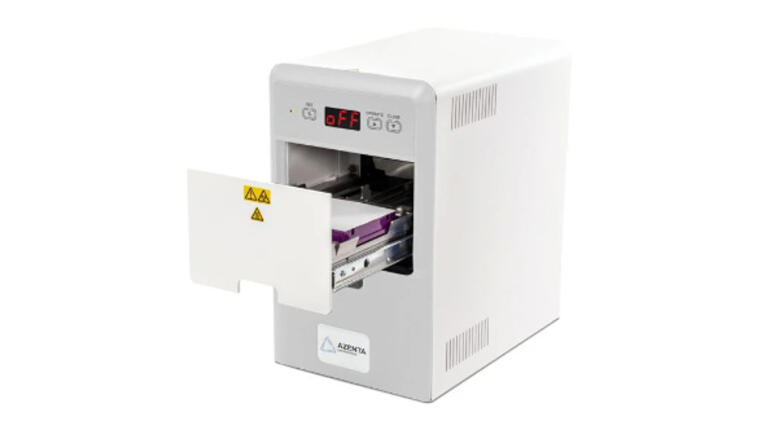
For budget-conscious laboratories, the Semi-Automated Sheet Heat Sealer from Azenta Life Sciences offers a practical way to improve the reliability and reproducibility of microplate sealing across a wide range of applications.
Built around proven heat-sealing technology, the system removes the variability often associated with manual adhesive methods, replacing it with a controlled and repeatable process. Users can quickly set the temperature and sealing time to suit different plate and film combinations, helping to achieve strong seal integrity while reducing the risk of incomplete seals or plate deformation.
The instrument’s semi-automated design helps standardise performance between users and workflows. An automated drawer mechanism ensures consistent positioning and pressure throughout the sealing process, minimising operator-dependent variation and supporting reproducibility, particularly in multi-user laboratories and higher-throughput environments.
Designed for routine laboratory use, the system offers rapid heat-up times and short sealing cycles to increase productivity. Its compact footprint makes it easy to accommodate on the bench, while broad compatibility with microplates allows a single instrument to support applications ranging from PCR and assay development to sample storage.
By creating a uniform bond between sealing film and plate, heat sealing provides a dependable barrier against evaporation and contamination. Adhesive seals, by comparison, can be influenced by application technique and environmental conditions, potentially introducing variability that affects downstream results.
As laboratories place increasing emphasis on workflow consistency and data quality, technologies that improve routine processes are attracting greater attention. The Semi-Automated Sheet Heat Sealer offers a straightforward, cost-effective way to strengthen microplate sealing performance while supporting efficiency and reproducibility.
More information online
ILM 51.6 Sept 2026





 Product directory