Autoclaves
Published over 12 years ago. See the latest and most current information on Autoclaves.
If you are looking for a new autoclave, some manufacturers will tell you that it is essential to have a drain, a compressor and a suitable power supply. This is a common situation when looking to purchase a small autoclave for laboratory use, but how practical is it to locate your autoclave near a drain?
In addition, small autoclaves that require compressors in order to operate have a greater number of integral serviceable components; inevitably this means that component failure is more likely, the end-result being downtime that a busy laboratory can ill-afford.
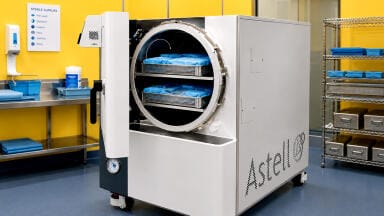
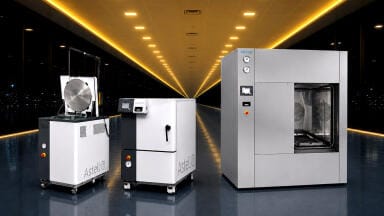
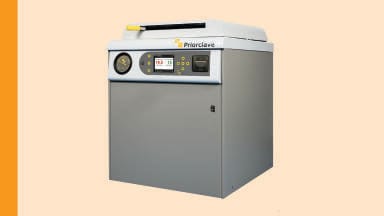
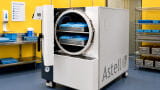
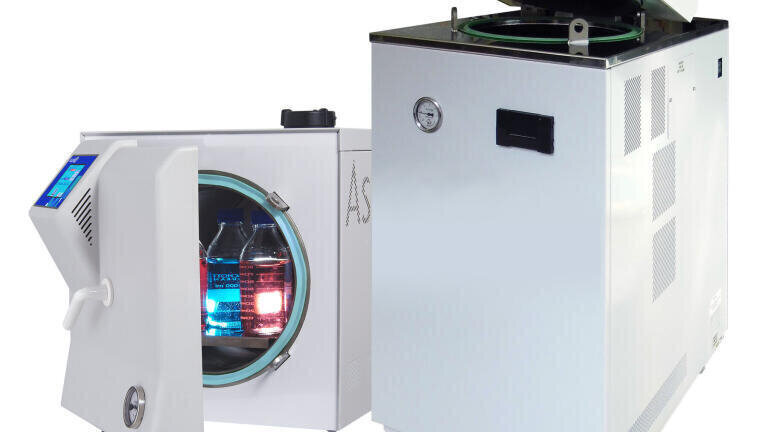
Astell Scientific offer a solution to the above issues. The Compact ‘Autofill’ models, available in 33, 43 and 63 litre capacities, are totally self-contained autoclaves that have no requirement for drainage, and do not need a compressor to operate. The Compact ‘Autofill’ range has been designed with one purpose in mind: to provide the simplest autoclaving solution for the typical microbiology laboratory.
When designing this versatile range, Astell began by making optimal use of the space available inside the autoclave frame, fitting an internal tank that acts as both a water reservoir and a condensate collection vessel. The controller software was then adapted to automatically fill and drain the chamber at the beginning and end of the cycle. Any residual steam during the air-removal (free steaming) stage passes through a condenser and back into the integral water reservoir. This clever design ensures that any loss of water is minimal and extremely gradual, meaning that the water in the tank only needs to be replenished occasionally.
Further innovations, such as the angled chamber design (which reduces the water level required for operation) combined with the fact that the hot water is completely removed from the chamber following the sterilisation process, reduce heat-up and cooling times. Additionally, the faster cycles and the water-saving features inevitably ensure that this range has excellent ‘green’ credentials.
Finally, following sterilisation, these models feature an innovative pulsed heat drying system which is suitable for non-porous loads such as laboratory glassware and plastics.
ILM 51.6 Sept 2026





 Product directory