Chromatography
Published over 5 years ago. See the latest and most current information on Chromatography.
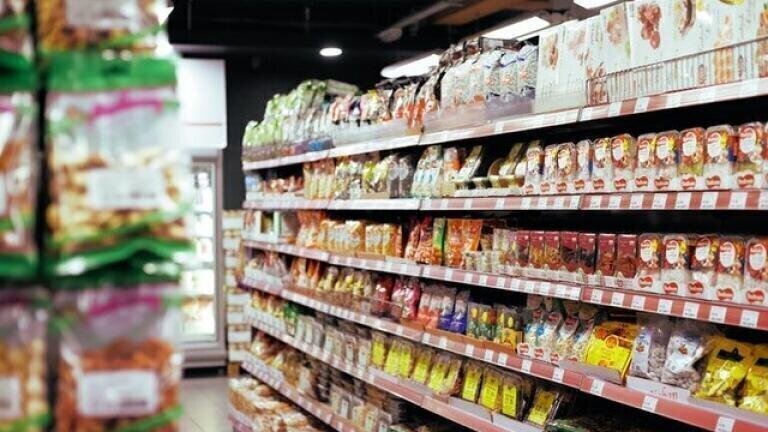
With many outbreaks traced back to supermarkets, the question of whether SARS-CoV-2 can live on food products has been raised around the world. While Public Health England has reassured members of the public it is “very unlikely that COVID-19 is transmitted through food or food packaging”, it is possible and both employees and customers should remain vigilant.
The World Health Organisation has issued similar advice, saying “There is currently no evidence that people can catch COVID-19 from food or food packaging. COVID-19 is a respiratory illness and the transmission route is through person-to-person contact and through direct contact with respiratory droplets generated when an infected person coughs or sneezes.”
New research from Imperial College London (ICL) warns the SARS-CoV-2 variant that first appeared in England and has now spread around the world has a “substantial transmission advantage” compared to previous strains. Known as RO, transmission advantage is used to gauge how infectious a virus or disease is. Researchers say the R0 of the new strain is between 0.4 to 0.7 points higher, meaning its reproduction number could be as high as 1.8. So what does this mean for transmission via food and packaging? Thankfully, not a lot.
While COVID-19 can spread quickly between humans, the WHO stresses that coronaviruses cannot survive and multiply in food. The virus needs a live human or animal host to multiply and cannot thrive on food or packaging.
While unlikely, there are some scenarios where a person could become infected with COVID-19 via food or packaging. This could occur if an infected person contaminated an item of food or packaging with infected droplets. If another person then touched these surfaces and then touched their face, transmission could occur.
According to WHO, washing fruit and vegetables with potable water is adequate.
Food and packaging may not pose a high risk, however environments such as shopping centres and restaurants are a different story. Human traffic is high and there are plenty of hard surfaces for the virus to live on if it’s spread through coughing, sneezing or even talking. Social distancing instore, as well as frequent hand sanitising and avoiding touching the face is one of the best ways to increase safety in these types of environments.
While COVID-19 may not be a high risk, there are growing concerns surrounding the presence of per- and polyfluoroalkyl substances (PFAS) in foods. Find out more in ‘New Concerns about PFAS in Food: The Convergence of Environmental Contamination and Food Safety.'
ILM 51.6 Sept 2026





 Product directory