Chromatography
Published over 6 years ago. See the latest and most current information on Chromatography.
While there’s plenty of talk surrounding a ‘second wave’ of COVID-19, some experts say the concept doesn’t exist. Instead, WHO has warned that the initial coronavirus wave that originated in Wuhan is still underway and accelerating. The organisation says the pandemic is currently expanding in “one big wave”, with global cases now surpassing 22 million. Since December, the virus has claimed more than 780,000 lives.
With no evidence to suggest COVID-19 adheres to the same seasonal variations seen in other coronaviruses such as influenza, WHO spokesperson Margaret Harris says the term ‘second wave’ is unhelpful when it comes to understanding the virus and its progression.
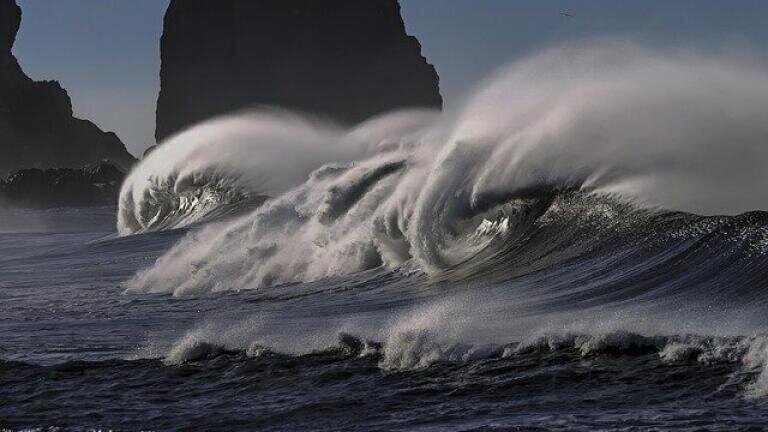
“People are still thinking about seasons. What we all need to get our heads around is this is a new virus and this one is behaving differently,” said Harris in a virtual briefing held in Geneva. “It’s going to be one big wave. It’s going to go up and down a bit. The best thing is to flatten it and turn it into just something lapping at your feet.”
Linda Bauld, a professor of public health at the University of Edinburgh agrees, saying “second wave” isn’t a term currently used in epidemiology. While it’s widely used, the term is ill-defined and vague, with no universally agreed scientific definition. Experts such as Bauld assert the virus is still growing exponentially, which means the first wave is still gaining momentum.
“The virus hasn’t gone away, it’s in our population, it has spread to 188 countries so far, and what we are seeing now is essentially localised spikes or a localised return of a large number of cases,” says Bauld.
In some cases, what can appear to be a ‘second wave’ is often just different areas of the same country or region catching up with each other when it comes to infection rates. For example, in the United States some outbreaks are being referred to a ‘second waves’ when really they’re the original wave gaining momentum and engulfing more regions.
“The US as a whole is not in a second wave because the first wave never really stopped,” says Melissa Hawkins, a professor of health at American University. “The virus is simply spreading into new populations or resurging in places that let down their guard too soon.”
While a COVID-19 vaccine isn’t guaranteed, experts around the world are racing to develop an inoculation. Chromatography could play a key role in the development of a vaccine, with ‘What is Eluent Generation?’ offering more information on the latest electrolytic process that allows the production of high purity eluents for ion chromatography, and is a part of Reagent-Free Ion Chromatography™ (RFIC™). The entire process only requires deionised water, eliminating the need to handle any acids or bases.
ILM 51.6 Sept 2026


 Product directory


.jpg)
.jpg)



















.jpg)
