Chromatography
Published over 17 years ago. See the latest and most current information on Chromatography.
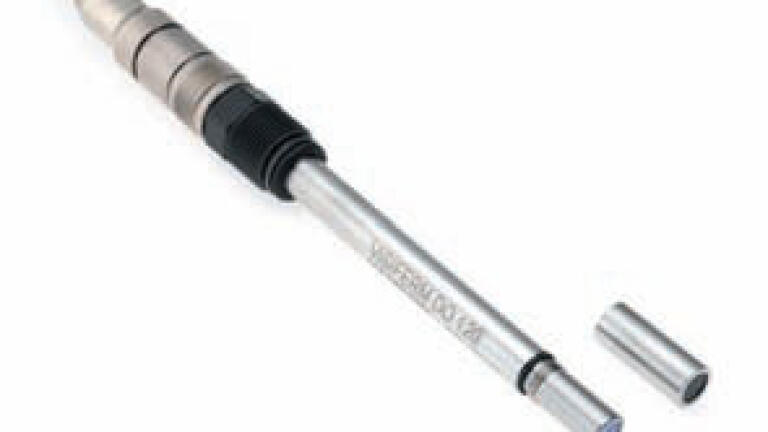
The VISIFERM™ DO oxygen sensor from Hamilton Bonaduz AG beams out blue light that serves for the measurement of the oxygen content of fluids or gases. The measurement principle is based on the fact that certain materials - so-called luminophores - absorb blue light and emit red light. The luminophore in the VISIFERM™ DO is hit by a succession of blue light pulses. When the luminophore is in contact with oxygen, then the higher
the oxygen pressure in the environment, the more the maximums of the radiated red light pulses approach those of the blue light.
The blue and red light pulses are measured by a photo diode. From the shift of the two light pulses to one another, the photodiode produces a signal that represents the value of the oxygen partial pressure in the measurement environment. The strengths of the VISIFERM™ DO in everyday practice are very much due to this measurement method. Most importantly, the signal that the sensor produces does not change as the luminophore wears. For this reason, the VISIFERM™ DO seldom has to be calibrated. Furthermore, the sensor itself consumes no oxygen during the measurement. VISIFERM™ DO can therefore perform precise measurements in static fluids.
ILM 51.6 Sept 2026

 Product directory