
News
A computational cell model developed by a research team in Hangzhou has used time-resolved protein measurements to support drug discovery
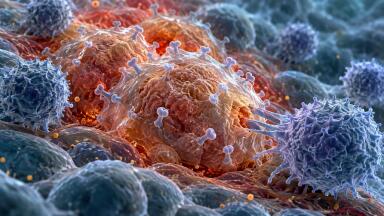
Researchers at Westlake University in Hangzhou, Zhejiang, China, have developed a computational model that uses changes in protein abundance to predict how breast cancer cells respond to treatment. The work puts experimental proteomics at the centre of a virtual-cell approach, rather than treating molecular measurements simply as a final check on a prediction.
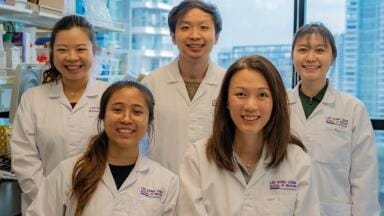
The study was authored by Rui Sun, Liujia Qian, Tiannan Guo and colleagues. Guo is an assistant professor in the School of Life Sciences at Westlake and leads research in intelligent proteomics. He is also a founder of Westlake Omics, a company working in the development and application of proteomic technologies space.
Called ProteinTalks, the model drew on approximately 16,000 time-resolved perturbation proteomic profiles. The researchers investigated applications including single-drug and combination responses, candidate markers of sensitivity and resistance, retrospective patient stratification and compound prioritisation in patient-derived organoids.
Genes provide instructions and messenger RNA carries information used in protein production but neither establishes directly how much of a protein is present at a particular moment. Measuring protein abundance can therefore reveal changes that would be missed by examining gene expression alone.
An early response to a drug may differ from the state reached after cells have adapted. A model trained on measurements collected at different stages can potentially distinguish an immediate perturbation from a later compensatory response. That distinction matters when researchers are deciding whether two drugs might reinforce or counteract one another.
Localisation, chemical modification, binding partners and cellular structure can all influence function without necessarily producing a large change in the amount measured. These missing dimensions should remain visible when predictions are interpreted.
For analytical laboratories, this work raises practical questions about how training datasets are generated. Sample preparation, instrument performance, batch correction and missing measurements can influence the patterns a model learns. If those factors correlate with an experimental treatment, a model may partly learn the workflow rather than the biology. Careful experimental design remains essential.
A model developed using breast cancer systems cannot automatically be assumed to perform well in other tissues, immune cells or microorganisms. Even within one disease, differences between laboratory cell lines and patient samples can alter responses and so extending the model requires evidence.
Patient-derived organoids offer a useful intermediate testing system because they preserve selected features of the tissue from which they were established. They can help assess whether a computationally prioritised compound produces an observable biological effect. However, they do not reproduce every aspect of drug exposure, immunity or whole-body metabolism, and successful organoid testing does not establish patient benefit.
Useful prospective tests should include unsuccessful predictions as well as successful ones. Reporting both would help users understand when the model can guide prioritisation and when additional experimental information is required.
For further reading please visit: 10.1038/s41586-026-11001-9
ILM 51.6 Sept 2026



 Product directory






















.jpg)
