Clinical, medical and diagnostics
A study has reported that an experimental ‘dark’ oral contrast agent improved bowel wall visualisation on computed tomography scans, helping radiologists to identify clinically relevant findings that conventional oral agents missed
A pilot feasibility study has suggested that an experimental oral contrast agent could help radiologists to assess bowel anatomy and abdominal disease more clearly during computed tomography (CT) imaging than conventional oral preparations.
The study, led by researchers at the Mayo Clinic, Rochester, Minnesota, USA, compared CT scans obtained after patients ingested the investigational agent with scans that used established oral contrast approaches such as water or iodine-based preparations. The authors reported that the experimental formulation improved bowel distension and bowel wall visualisation, and helped clinicians to identify additional, clinically relevant imaging findings that standard contrast did not reveal.
The Mayo’s collaborators included the University of Washington School of Medicine, the University of California San Francisco and Nextrast Inc., based in Hillsborough, California, USA.
Oral contrast agents play a central part in abdominal CT, where radiologists often need to distinguish the bowel wall from its contents and from neighbouring soft tissues. Conventional ‘positive’ agents tend to appear bright on CT, while ‘neutral’ agents may appear closer to surrounding tissues. In some scenarios, however, these approaches can make subtle lesions difficult to detect, particularly in segments such as the stomach and proximal small bowel, where luminal distension and wall delineation can prove challenging.
The pilot study evaluated a ‘dark’ borosilicate oral contrast medium, described by the authors as a novel class of oral imaging agent. In general terms, a ‘dark’ agent aims to render the bowel lumen lower in attenuation than adjacent soft tissues on CT, which can improve contrast between the bowel wall and the lumen and make enhancing abnormalities more conspicuous.
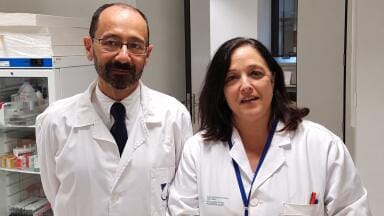
“CT scans performed with the novel agent will likely do a better job of displaying pathologies in the stomach and proximal small bowel, areas where CT with traditional oral contrast performs poorly,” said Dr. Joel Fletcher, medical director of the Mayo Clinic CT Clinical Innovation Center and a senior author on the study.
“Pathologies within the lumen will be better displayed because the lumen is more distended, and the brightness of the pathologies on the CT images will be increased, making them more conspicuous,” he added.
The investigators compared scans from 32 patients who underwent CT imaging with the dark borosilicate agent and with conventional oral contrast media. The cohort included individuals with inflammatory bowel disease and others with suspected peritoneal carcinomatosis, a clinical context where radiologists may need to detect subtle soft-tissue deposits within the abdomen. No severe adverse effects were reported with the experimental agent in this small study.
Across multiple intestinal segments, readers scored bowel wall visualisation and luminal distension more highly when patients received the dark agent, with statistically significant improvements reported from the stomach through to the ileum. The authors also measured a higher attenuation difference between the bowel wall and the lumen, which they argued supported the core imaging rationale for this approach.
Importantly, evaluators identified additional imaging findings in seven patients that were not detected using the standard oral contrast approach, equivalent to 22 per cent of the cohort. While the study design did not establish whether these findings would alter management in every case, the results suggested that improved bowel delineation could translate into higher diagnostic confidence, particularly for small lesions or subtle inflammatory change.
“The novel dark borosilicate contrast agent has the potential to improve the assessment of numerous pathologies, including the detection of cancer and inflammatory disorders,” said Dr. Achille Mileto, a radiologist at the University of Washington School of Medicine and the paper’s first author.
Dr. Benjamin Yeh, a radiologist at the University of California San Francisco and a co-founder of Nextrast, said the agent aimed to address limitations that affect current options across a broad range of abdominal indications.
“We carefully designed this novel class of oral contrast agent to overcome many of the diagnostic shortcomings of existing contrast agents for a broad range of diseases,” he said.
However, the researchers emphasised that further study is needed in larger patient populations, both to confirm performance across diverse disease contexts and to characterise safety, tolerability and operational practicality at scale.
For further reading please visit: 10.1007/s00261-025-05308-w
ILM 51.6 Sept 2026




 Product directory