Clinical, medical and diagnostics
A large UK Biobank analysis has linked menopause to structural brain changes, poorer mental health and disruption to sleep, while suggesting that hormone replacement therapy may slow declines in reaction time without preventing broader neurological effects
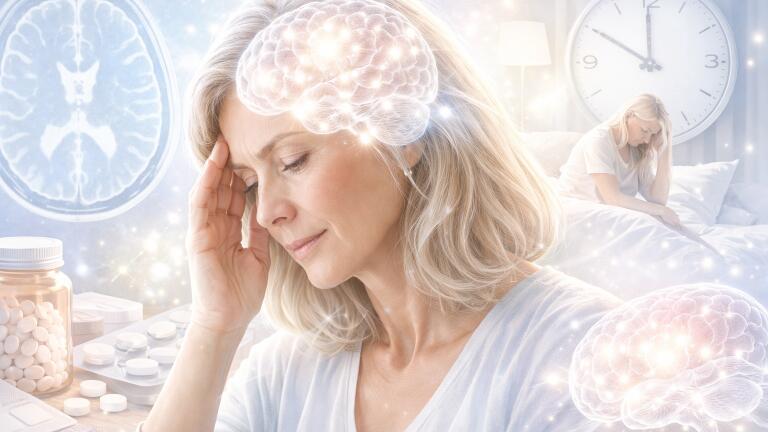
Menopause has been linked to reductions in grey matter volume in key brain regions, alongside higher levels of anxiety, depression and sleep disturbance, according to a large population study led by the University of Cambridge. The research has also reported that hormone replacement therapy (HRT) does not appear to prevent these neurological and mental health changes, although it may slow age-related declines in reaction time.
The findings are based on an analysis of data from almost 125,000 women enrolled in UK Biobank, one of the world’s largest biomedical databases.
Menopause marks the permanent cessation of menstruation as ovarian hormone levels fall, typically between the ages of 45 and 55. This transition is often accompanied by vasomotor symptoms, changes in mood and sleep disruption. Previous research has associated menopause with aspects of cognitive decline, including difficulties with memory, attention and language but evidence on how menopause and the subsequent use of HRT medication can affect the brain has remained limited.
To address this gap, the Cambridge team classified participants into three groups: women who had not yet reached menopause, women who were post-menopausal and had never used HRT, and women who were post-menopausal and had used HRT. Participants completed detailed questionnaires covering menopausal symptoms, mental health, sleep patterns and general health.
Subsets of the cohort also completed cognitive tests, including assessments of memory and reaction time, while around 11,000 women underwent magnetic resonance imaging (MRI) scans to give detailed examinations of brain structure.
The average age at menopause among participants was approximately 49.5 years. Women who were prescribed HRT began treatment at a mean age of around 49 years.
Post-menopausal women were more likely than those who were pre-menopausal to report having sought help from a general practitioner or psychiatrist for anxiety or depression. They also scored higher on validated questionnaires that assessed depressive symptoms and were more likely to have received prescriptions for antidepressant medication.
Women who had used HRT showed higher levels of anxiety and depression than post-menopausal women who had not used the treatment. But further analysis indicated that these differences were already present before menopause. The researchers suggested that – in some cases – clinicians may have prescribed HRT in anticipation that menopausal transition could exacerbate pre-existing symptoms.
Sleep disruption was also more common after menopause. Post-menopausal women were more likely to report insomnia, reduced sleep duration and persistent tiredness. Women who had used HRT reported the greatest levels of fatigue across all groups, despite no measurable difference in sleep duration when compared with post-menopausal women who had not used the treatment.
“Most women will go through menopause and it can be a life-changing event whether they take HRT or not,” said Dr Christelle Langley from the Department of Psychiatry at the University of Cambridge.
“A healthy lifestyle – exercise and a healthy diet – is particularly important during this period to help mitigate some of its effects.
“However, we all need to be more sensitive to not only the physical but also the mental health of women during menopause and to recognise when they are struggling. There should be no embarrassment in letting others know what you’re going through and to ask for help,” she added.
The study also examined cognitive performance. Post-menopausal women who had not used HRT showed slower reaction times than women who were pre-menopausal or post-menopausal women who had used the therapy. In contrast, no significant differences were observed between groups in tests of memory.
“As we age, our reaction times tend to get slower – it’s just a part of the natural ageing process and it happens to both women and men,” said Dr Katharina Zühlsdorff from the Department of Psychology at the University of Cambridge.
“You can imagine being asked a question at a quiz. While you might still arrive at the correct answer as your younger self, younger people would get there faster.
“Menopause seems to accelerate this process but HRT appears to put the brakes on, slowing the ageing process slightly,” she said.
Furthermore, MRI scans revealed significant reductions in grey matter volume in women after menopause, regardless of HRT use. Grey matter contains the cell bodies of neurons and plays a central role in information processing, movement control, memory and emotional regulation.
The reductions were most pronounced in the hippocampus (which supports memory formation and storage) the entorhinal cortex (which acts as a key interface between the hippocampus and other brain regions) and the anterior cingulate cortex (which contributes to emotional regulation, decision-making and attentional control).
“The brain regions where we saw these differences are ones that tend to be affected by Alzheimer’s disease,” said Professor Barbara Sahakian, senior author of the study from the Department of Psychiatry.
“Menopause could make these women vulnerable further down the line. While not the whole story, it may help explain why we see almost twice as many cases of dementia in women than in men,” she added.
The research was funded by the Wellcome Trust, with additional support from the National Institute for Health and Care Research Cambridge Biomedical Research Centre.
For further reading please visit: 10.1017/S0033291725102845
ILM 51.6 Sept 2026




 Product directory