Clinical, medical and diagnostics
Study in Genes & Development has shown that blocking the transcriptional regulator p300 forces tumour cells into lethal protein stress, re-sensitising chemotherapy-resistant cancers without an increase in drug dose
Researchers at the Sylvester Comprehensive Cancer Center (SCCC), part of the University of Miami Miller School of Medicine, Florida, USA, have reported that inhibition of the transcriptional co-activator p300 can re-sensitise chemotherapy-resistant tumours to platinum-based treatment. The findings describe a mechanistic shift in how cancer cells respond to DNA damage and suggest a rational route to overcome drug resistance without an increase in systemic toxicity.
Platinum agents such as cisplatin remain a foundation of oncology treatment. They damage DNA and trigger cellular checkpoints that instruct cells to halt transcription and replication until repair can occur. In healthy tissue, this pauses functions as a safeguard. In tumours, however, malignant cells often acquire the capacity to tolerate DNA lesions, reroute repair pathways and persist despite chemotherapeutic assault. This adaptive capacity has led to treatment resistance to platinum therapy in many solid malignancies.
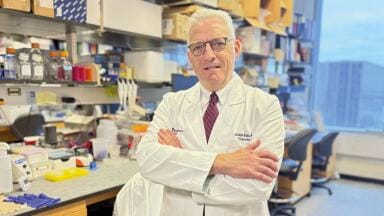
“It’s a fresh angle on the long-standing problem of chemotherapy resistance and an encouraging path toward restoring the power of widely used chemotherapy drugs,” said Dr. Ramiro Verdun, research professor in the division of haematology at SCCC.
Under physiological conditions, cells that sustain genotoxic stress reduce transcriptional activity. This pause prevents the synthesis of aberrant proteins from damaged templates. The protein p300 plays a central role in this response. It helps to coordinate chromatin remodelling and assists in the clearance of stalled transcriptional machinery at sites of DNA damage, which allows orderly repair.
“It’s one of the most basic safety checks a cell has,” said Verdun.
“When the DNA script is damaged, the cell is supposed to deal with the problem before pushing forward,” he added.
The investigators demonstrated that inhibition of p300 disrupted this protective pause. In experimental systems, stalled transcription complexes persisted at sites of DNA injury and transcription continued through damaged regions. As a consequence, cells synthesised large quantities of defective or unstable proteins. This surge in aberrant protein production placed acute pressure on the endoplasmic reticulum, the organelle responsible for protein folding and quality control.
The accumulation of misfolded proteins activated the unfolded protein response, a cellular stress pathway that attempts to restore proteostasis. When stress exceeded the adaptive capacity of the cell, the response became maladaptive and culminated in cell death. Rather than enhance DNA damage itself, p300 inhibition shifted the cellular burden from genomic repair to proteotoxic stress.
In laboratory models and patient-derived xenografts, platinum chemotherapy alone produced limited tumour control in resistant settings. Inhibition of p300 alone exerted modest effects. However, the combination of a p300 inhibitor with platinum therapy produced a marked synergistic response and selectively eliminated tumour cells.
“It is the biological equivalent of overloading a faulty circuit – not by increasing DNA damage, but by bypassing the cancer’s usual resistance response,” said Verdun. “These cells can cope with cisplatin-damaged DNA, but they can’t cope with the sudden and intense protein stress that builds up when transcription keeps going.”
Platinum agents face two principal constraints in clinical practice. Tumours frequently develop resistance, and dose escalation often proves impossible because of toxicity to normal tissues, particularly the kidneys and peripheral nerves. The present work has proposed an alternative strategy: rather than intensify chemotherapy, alter the internal stress landscape of the tumour so that standard doses regain efficacy.
In two chemo-refractory patient-derived models – colorectal cancer and paediatric osteosarcoma – the combination approach reduced tumour burden and improved survival compared with either treatment alone. These data suggest that p300 inhibition can convert an adaptive stress response into a liability.
“What excites us most is the opportunity this creates [in] treatment for patients who’ve run out of options,” said Dr. Ramin Shiekhattar, co-leader of the cancer epigenetics programme at SCCC and chief of the division of cancer genomics and epigenomics.
“By uncovering this stress state, we can begin to design smarter combinations that anticipate resistance rather than simply react to it, with the long-term goal of making standard chemotherapies work longer and for more people,” he said.
The research has identified a stress pathway that has not previously been exploited in this context. When transcription persists despite DNA damage, cells enter a state of unresolved proteotoxic stress that can be targeted therapeutically. Blocking p300 prevents orderly resolution of stalled transcription and drives tumour cells towards collapse under combined genotoxic and proteostatic strain.
“For patients whose tumours have stopped responding to chemotherapy, this gives us a way to make those treatments meaningful again,” said Dr. Lluis Morey, associate professor in the Dr John T. Macdonald Foundation department of human genetics.
“This study doesn’t just add a chapter to the DNA repair story – it reframes it. It shows that the danger isn’t only in the damage itself, but in what happens when cells refuse to hit pause,” he added.
The authors have argued that this approach warrants further preclinical development and eventual clinical evaluation. If validated in patients, p300 inhibitors could enter combination regimens with platinum drugs in a targeted and mechanistically informed manner. By alter tumour stress responses rather than increase drug intensity, the strategy may extend the therapeutic window of established chemotherapy and offer renewed hope for individuals with resistant disease.
For further reading please visit: 10.1101/gad.353164.125
ILM 51.6 Sept 2026




 Product directory