Laboratory products
Published over 10 years ago. See the latest and most current information on Laboratory products.
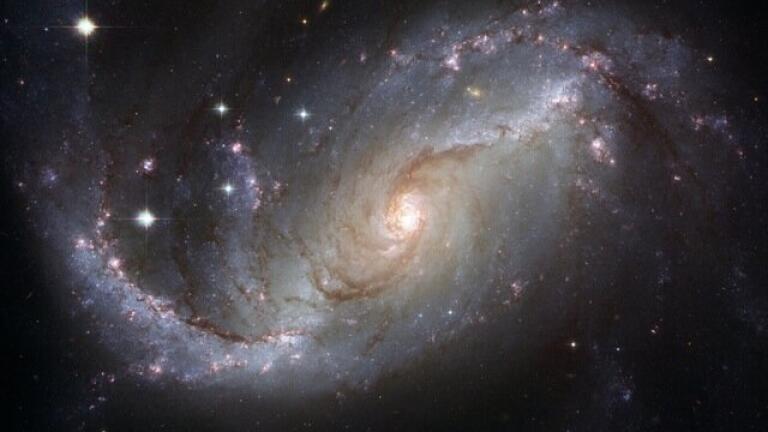
Is there life on other planets? It’s a question that fascinates the world – both experts and the general public. Astronomers haven’t had much of a breakthrough to keep them hopeful in the search for extra-terrestrial intelligence. One promising method, however, is the use of radio telescopes to detect radio signals from life on other planets.
In August 1924, the USA held a National Radio Silence Day. The United States government asked for radios to be kept quiet at regular 5 minute intervals. The idea was to allow a large radio receiver to attempt to pick up radio waves from Mars, which would indicate extra-terrestrial life. So what did the radio detect? Silence. Unfortunately, on this occasion there were no extra-terrestrial signals, but as technology develops, our chances of discovering life on other planets can only increase.
Well, since 1924, technology certainly has developed. The SETI (Search for Extra-terrestrial Intelligence) Institute is now using a much more powerful radio telescope – the Allen Telescope Array (ATA) – to try and pick up signals from a nearby star system.
Of course, it’s not certain that the life on these planets will be emitting radio waves, For the ATA to pick up the signals, the planet will need to be near enough for us to detect the leaking of their radio waves into space, or be purposely sending the radio waves in our direction,
It’s not that unlikely though. The Earth has been leaking our radio signals for over a century. We’ve even been sending out radio signals to other planets more recently, in case they have the same idea.
The telescope is specifically targeting star systems that we know to be habitable. So called “habitable zones” have been discovered by NASA’s Kepler Space Telescope. They are zones around any star that a planet can orbit but also have a temperature that allows water to exist – not too hot or too cold.
Water means life. If planets are too cold for water, they won’t be a habitat for life. Water has a freezing point of zero degrees Celsius, so the planet’s atmosphere would have to have a higher temperature than this. Some substances have a lower freezing point than water, and need a sufficiently low temperature to preserve them. It’s a big concern when storing samples in a laboratory. ‘Sustainably Cool: ULT freezers’ explores the need for ultra-low temperature freezers in laboratories, the ways in which they have to be effective, and the issue of environmental impact.
ILM 51.6 Sept 2026




 Product directory