Laboratory products
Published over 10 years ago. See the latest and most current information on Laboratory products.
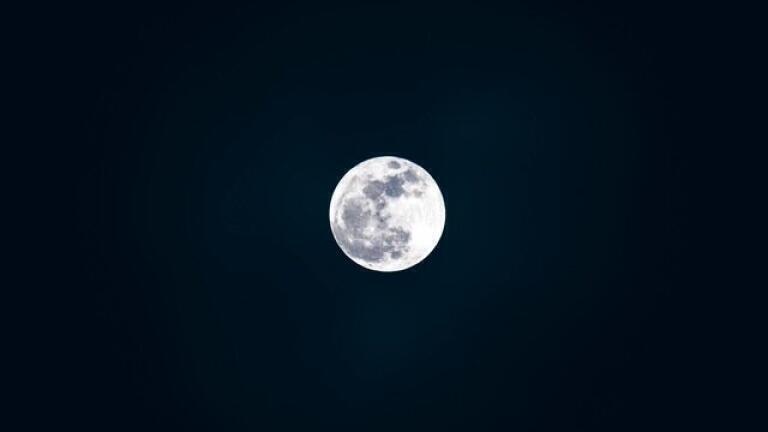
Space enthusiasts geared themselves up on Monday as NASA were set to make a big announcement. Could it be aliens? Could it be a meteor warning? It was sure to be something exciting, because, well, it’s a NASA announcement. They’re hardly the type of organisation to announce something mundane.
In a short online post a week earlier, they announced they were to hold a ‘Media Call’ and that it was regarding activity from their Hubble Space Telescope. In particular, the activity was on Europa, the icy moon of Jupiter. And on the day of the announcement, they didn’t disappoint.
Their famous Hubble Space Telescope has captured images of what appears to be water vapour coming off the surface of Europa. These so-called ‘plumes’ of vapour erupt off the moon up to 125 miles high, and suggest that there may be holes in the icy surface. Because of the thick icy surface, it was previously thought that a mission to Europa would require intense drilling in order to gain samples of the moon’s subsurface. However, it might now be possible for NASA to gather samples without even landing.
The team of scientists were actually observing the images to analyse the atmosphere of Europa. By viewing it as it passes over the surface of Jupiter, they were able to see it as a silhouette and explore the ‘absorption features’. The same method, however, can highlight features like plumes. And on three of ten observations, the team noticed the potential vapour.
"The atmosphere of an extrasolar planet blocks some of the starlight that is behind it. If there is a thin atmosphere around Europa, it has the potential to block some of the light of Jupiter, and we could see it as a silhouette. And so we were looking for absorption features around the limb of Europa as it transited the smooth face of Jupiter," explains William Sparks, who led the team.
The importance of vapour isn’t just specific to space. It’s also at the centre of some of the work we do down here on Earth. Converting liquid sources into vapour is a requirement in a number of industries, but at the moment it has some problems. Some methods aren’t suitable for multiple liquid sources, while some are less suitable for dealing with hazardous liquids. ‘Low Energy, Low Temperature Liquid Source Evaporation’ explores the potential solution brought about by the Vapour Delivery Module.
ILM 51.6 Sept 2026




 Product directory