Research news
Experiments aboard the International Space Station have shown that bacteriophages can still infect Escherichia coli under microgravity, but the evolutionary pathways of both virus and host diverge markedly from those observed on Earth, with implications for space biology and antimicrobial research
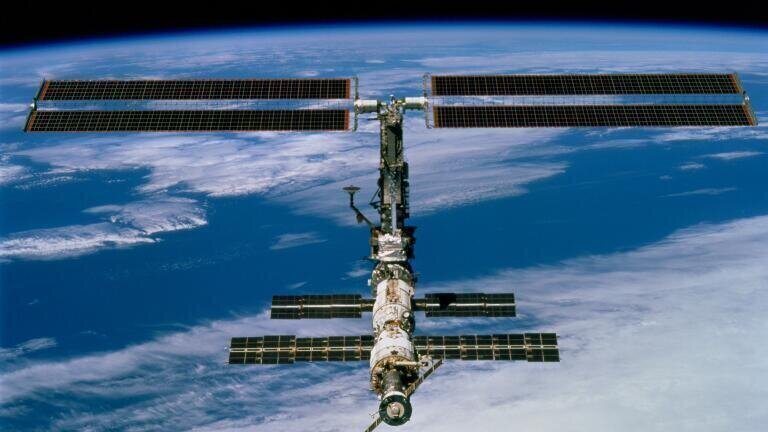
Bacteria-infecting viruses isolated from terrestrial environments have retained the capacity to infect their microbial hosts under near-weightless conditions aboard the International Space Station (ISS), according to a study that has revealed how profoundly microgravity can reshape the evolutionary dynamics of virus–bacterium interactions. The work, led by Dr. Phil Huss of the University of Wisconsin–Madison in the USA, provides one of the most detailed examinations to date of phage biology beyond the Earth.
Bacteriophages – often shortened to ‘phages’ – are viruses that infect bacteria and are among the most abundant biological entities on the planet. Their interactions with bacterial hosts are central to the regulation of microbial ecosystems in soils, oceans, and the human body. On Earth, these interactions are frequently characterised as an evolutionary arms race, in which bacteria evolve molecular defences to block infection, while phages respond by acquiring counter-measures that restore infectivity. This dynamic co-evolution has been studied extensively under terrestrial conditions but far less is known about how it would proceed in space.
Microgravity represents a fundamentally different physical environment for microbial life. Previous studies have shown that bacterial physiology changes under such conditions, with differences seen in cell shape, growth patterns and gene expression. The physics of how viruses encounter and attach to bacterial cells also changes, because the absence of buoyancy-driven convection and sedimentation alters how particles move through liquid media. Together, these factors have the potential to disrupt familiar patterns of infection and evolution, yet the precise consequences for phage–bacterium systems have remained largely unexplored.
To address this gap, Huss et al designed an experiment that allowed a direct comparison between virus–host interactions on Earth and those occurring in orbit. The team worked with Escherichia coli (E.coli) and a lytic bacteriophage known as T7 which infects E. coli by binding to specific receptors on the bacterial cell surface. Parallel cultures were established, with one set incubated under standard laboratory conditions on Earth and an otherwise identical set sent to the ISS where they experienced sustained microgravity.
Analysis of the space-based samples showed that infection did occur, although not in a manner identical to that observed under normal gravitational conditions. After an initial delay, T7 phages successfully infected their E. coli hosts aboard the station, confirming that microgravity did not prevent the basic processes of viral attachment, genome injection and replication. However, when the researchers examined the genetic consequences of these interactions, clear differences emerged.
Whole-genome sequencing revealed that both the bacterial populations and the phage populations from the ISS accumulated mutations that differed substantially from those detected in the Earth-based controls. In the space-grown phages, certain genetic changes appeared repeatedly over time. These mutations were consistent with enhanced infectivity or improved ability to bind to bacterial receptors, suggesting that selection pressures in microgravity favoured viral variants better adapted to the altered physical environment.
At the same time, the E. coli populations grown aboard the station accumulated their own distinctive set of mutations. Many of these changes were associated with increased resistance to phage infection or with improved survival under near-weightless conditions. The findings indicate that, even though infection still occurred, the evolutionary trajectories of both virus and host diverged from those seen on Earth, with each adapting to a different balance of constraints and opportunities.
To examine these viral adaptations in greater detail, the researchers applied a high-throughput method known as deep mutational scanning. This approach allows the effects of a very large number of individual mutations to be assessed simultaneously. The team focused on the T7 receptor binding protein, a critical component that determines which bacterial cells the phage can infect. By systematically analysing variants of this protein, the researchers identified further differences between the space-derived and Earth-derived phage populations.
These analyses showed that microgravity favoured changes in the receptor binding protein that altered how the phage interacted with bacterial surfaces. To understand the functional consequences of these changes, the team conducted additional experiments on Earth.
These tests demonstrated that some of the microgravity-associated variants showed increased activity against E. coli strains responsible for urinary tract infections in humans, strains that are normally resistant to infection by standard T7 phages.
The results suggest that the unusual selective environment of space can uncover viral adaptations that remain rare or inaccessible under terrestrial conditions. By exposing phages to altered physical and biological constraints, researchers may gain insights into fundamental aspects of virus evolution and – potentially – identify traits that could be harnessed for practical applications.
The study also has implications for the management of microbial life during long-duration space missions. As human exploration extends further beyond Earth, understanding how bacteria and their viruses behave in space will become increasingly important, both to protect astronaut health but also to maintain life-support systems that rely on microbial processes.
“Space fundamentally changes how phages and bacteria interact: infection is slowed, and both organisms evolve along a different trajectory than they do on Earth,” the authors wrote.
“By studying those space-driven adaptations, we identified novel biological insights that allowed us to engineer phages with far superior activity against drug-resistant pathogens back on Earth,” they concluded.
For further reading please visit: 10.1371/journal.pbio.3003568
ILM 51.6 Sept 2026



 Product directory



















,-photo-Karin-Allander.jpg)