Research news
A Dartmouth College research team has reported that plasmids can force bacteria to form dense clusters in order to tolerate antibiotics which suggests a source of treatment failure that does not depend on conventionally acquired genetic resistance
A study from Dartmouth College, Hanover, New Hampshire, USA, has reported that mobile DNA ‘hitchhikers’ inside bacteria can increase tolerance to medical treatment by forcing cells to assemble into tightly packed groups. The work describes a mechanism that can make infections harder to clear even when bacteria do not carry conventional, genetically-encoded antibiotic resistance.
The research has focused on plasmids, small DNA molecules that bacteria often carry in addition to their main chromosome. Plasmids can act as genetic passengers that depend on a host cell to persist and replicate. They also spread between bacteria via a process called conjugation, during which a donor cell forms a tube-like appendage known as a conjugation pilus to connect with a neighbouring cell and transfer a copy of the plasmid.
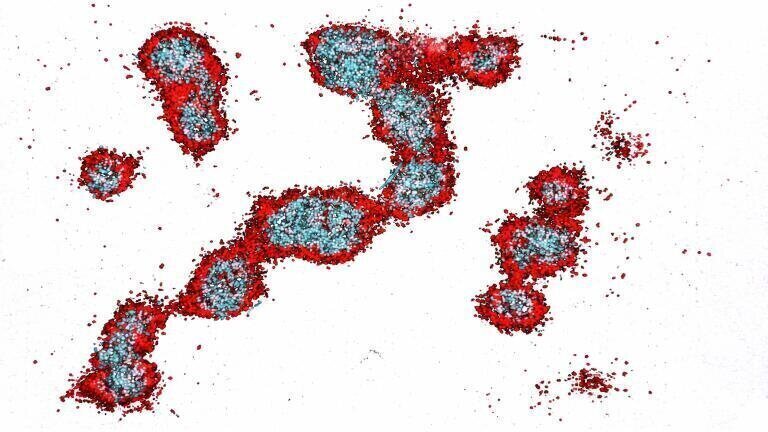
Dartmouth researchers have reported that a pilus can do more than enable DNA transfer. As a pilus links to neighbouring cells, they can corral bacteria into dense clusters. In those clusters, the community can withstand antibiotic exposure, even when individual cells lack genetic resistance. The team has also reported that plasmids can force multiple bacterial species to mix within a single community, including species that do not normally form groups.
“These are scary findings,” said Dr. Carey Nadell, an associate professor of biological sciences at Dartmouth and the study’s senior author.
“We’re not seeing antibiotic resistance based on genetic encoding which commonly happens. Instead, plasmids can make bacterial cells much more tolerant to harm just by changing how they are arranged in space.”
The first author, James Winans, a doctoral candidate in Nadell’s laboratory, said the phenomenon arose as an incidental consequence of plasmid spread.
“It’s a simple byproduct of how plasmids move from one cell to the other,” he said.
“A lab setting likely makes this process more efficient, but I would be surprised if this weren’t happening in settings outside the laboratory,” he added.
The findings sit within a long-running clinical challenge with many severe infections involving bacterial communities known as biofilms. Biofilms are structured assemblages of cells embedded within a self-produced matrix which can attach to tissues and medical devices. Biofilms often show high tolerance to antibiotics and immune attack because drugs and immune factors can struggle to penetrate the matrix and because some cells inside the biofilm enter slow-growing states that reduce antibiotic susceptibility. Nadell said treatments such as antibiotics and bacteriophages – viruses that infect and kill bacteria – often attack biofilms from the outside in which can leave cells within the interior sheltered long enough to persist and later reseed infection.
“Clinical treatments for infection are often not very useful against bacteria in a biofilm state,” Nadell said.
“Tight bacterial cell groups like our team observed would be difficult to eliminate without extreme measures such as intense heat or bleach which are obviously not clinically viable treatments,” he added.
To explore how biofilm structure affects plasmid movement, the team worked primarily with E. coli, a common intestinal bacterium that includes both harmless strains and strains that can cause disease. They found that when they introduced a small number of plasmid-carrying cells into an E. coli biofilm, plasmids could spread widely through the community within three days. As plasmids disseminated, the associated pili-mediated connections promoted cluster formation which coincided with increased tolerance to antibiotic treatment at the level of the community.
Plasmids have played an outsized role in genetics research because they are relatively simple to manipulate and can adapt quickly. In nature, they are widespread, but they persist only when they reside inside a bacterial host. For bacteria, the relationship can vary from parasitic to beneficial and symbiotic. Some plasmids behave largely as burdens that divert resources towards replication and transfer. Others encode traits that help the host, including genes that confer conventional (genetic) antibiotic resistance.
The Dartmouth team has also emphasised that the tolerance effect they observed did not always provide a net benefit with plasmid-driven clustering appeared to impose trade-offs. Cells in dense groups became slower and less likely to disperse, and they performed worse at activities such as foraging for nutrients. That cost could matter in real-world settings, where bacteria compete for resources and may need to migrate to colonise fresh territory. Even so, the researchers said that if plasmid-driven clusters form in patients, the resulting tolerance could complicate therapy.
The team reported that the clustering phenomenon extended beyond E. coli. They observed similar effects between different bacterial species, including Salmonella enterica, which can cause foodborne illness linked to undercooked poultry and eggs, and Serratia fonticola, an opportunistic pathogen. The researchers also explored how other microbes influenced plasmid transfer and cluster formation. Their experiments included the yeast Candida albicans, which can live in the human gut and can cause thrush, and Vibrio cholerae, the bacterium that causes cholera.
The study has not yet resolved the precise reasons why plasmid-driven clusters tolerate antibiotics better. One possibility is physical in that tightly packed groups may cut down on the opportunities for drugs to penetrate leaving the interior cells exposed to lower concentrations. Another possibility is physiological whereby dense clusters may slow growth. Many antibiotics work best against actively dividing cells, so growth arrest can reduce antibiotic killing.
Nadell said the team planned to investigate how these plasmid-driven groups promote tolerance in more detail, with the aim to identify vulnerabilities that could improve treatment.
“Plasmids are very common in the natural environment. It’s alarming to think they have an ability to work together with pathogenic bacteria against us and our clinical interventions,” Nadell said.
“But it’s better to know that than not to know, and now we can try to find a way around it,” he concluded.
For further reading please visit: 10.1016/j.cub.2025.11.022
ILM 51.6 Sept 2026




 Product directory




















,-photo-Karin-Allander.jpg)