Research news
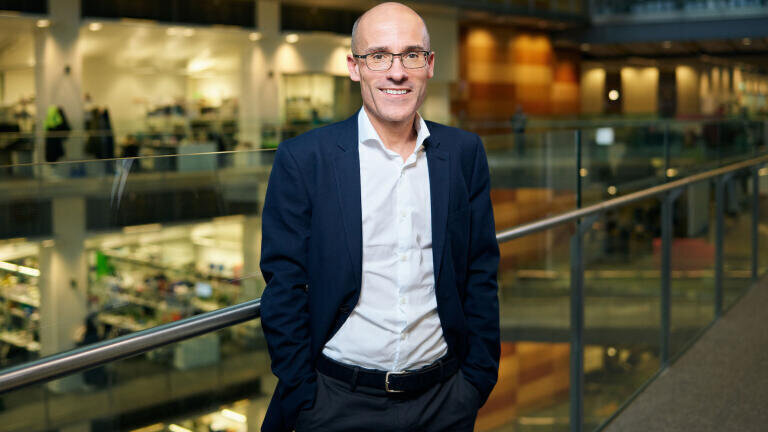
The 2026 Sjöberg Prize has been awarded to Charles Swanton of the Francis Crick Institute for his discoveries concerning the clonal evolution of cancer cells and its importance for tumour growth and metastasis.
Swanton’s work has advanced understanding of how tumours evolve over time. While it has long been established that cancer begins with genetic mutations that drive uncontrolled cell division, his research has demonstrated that tumours are not genetically uniform. Instead, different regions within the same tumour can harbour distinct mutations - a phenomenon known as intratumour heterogeneity.
In early studies, Swanton and colleagues analysed multiple regions from individual kidney tumours and showed that each region contained unique genetic alterations. These findings suggested that tumours evolve in a branching manner, with new mutations emerging in subclones as the disease progresses.
To investigate this process in patients over time, Swanton initiated the UK-wide TRACERx (TRAcking Cancer Evolution through therapy) programme. The study followed hundreds of lung cancer patients from diagnosis through treatment and relapse, enabling researchers to map tumour evolution longitudinally.
The results have provided insight into why some cancers are not fully eradicated by therapy. Early ‘trunk’ mutations are shared across all tumour cells, while later ‘branch’ mutations may be present only in subpopulations. Treatments that eliminate certain branches may leave others intact, allowing disease recurrence.
Beyond improving biological understanding, this work has informed the development of blood-based assays designed to detect minimal residual disease and early relapse.
“If we can understand how the very first step in tumour initiation and evolution occurs, we may be able to intercept it and prevent cancers from emerging,” Charles Swanton said.
The Sjöberg Prize, awarded by the Royal Swedish Academy of Sciences, recognises fundamental contributions to cancer research and includes a research award of US$1 million.
More information online
ILM 51.6 Sept 2026



 Product directory















,-photo-Karin-Allander.jpg)