Research news
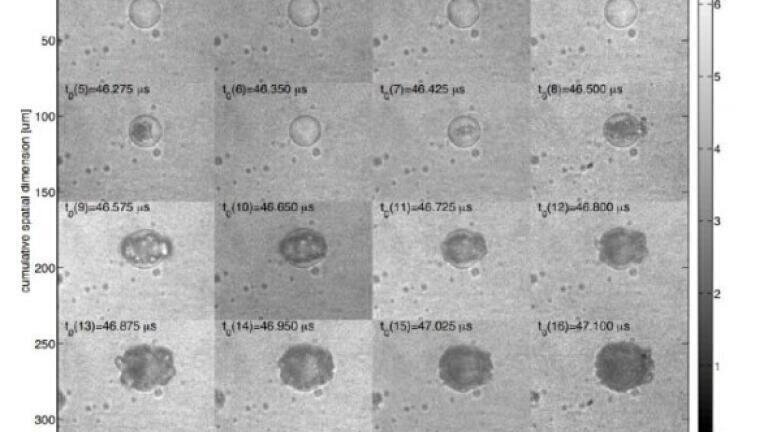
Researchers at the University of Michigan have gained unprecedented insight into the behaviour of microscopic droplets used in drug delivery - capturing events that last only billionths of a second. Using a combination of ultra-fast framing and streak imaging, the team was able to visualise the rapid release of fluids at a level of detail impossible with conventional techniques.
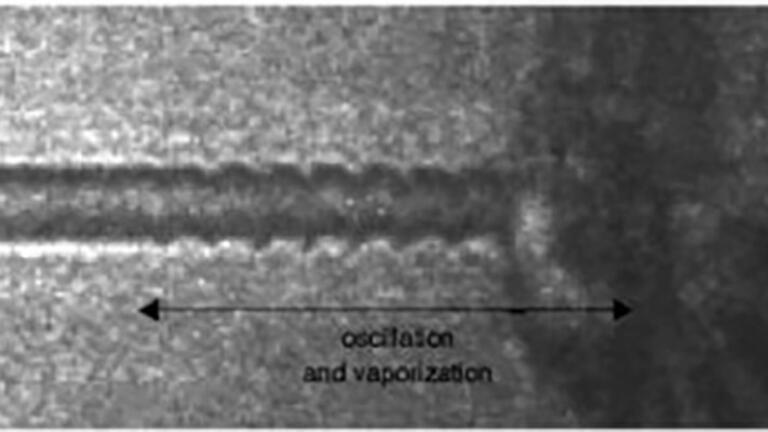
“These droplets burst and release their contents in nanoseconds, a timescale far too fast for traditional imaging methods,” explained Mr Wai Chan of Specialised Imaging. “By combining framing and streak images, we can simultaneously see both the 2D spatial structure and the temporal evolution of the event.”
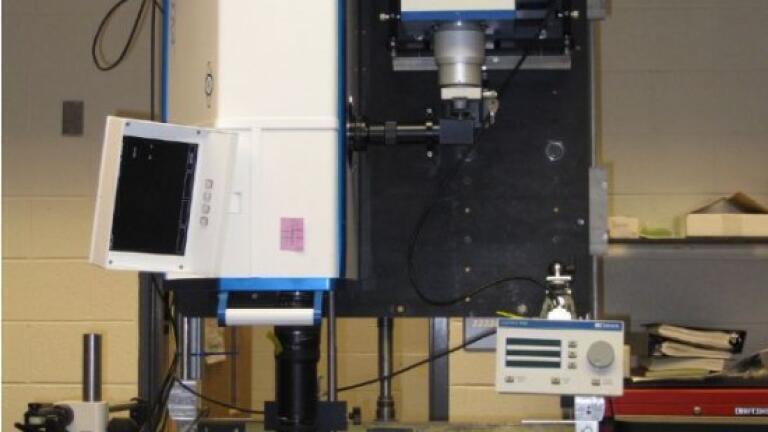
The approach relies on an optical system that allows multiple imaging instruments to share the same field of view. This makes it possible to correlate high-resolution spatial snapshots from the framing camera with continuous temporal data from the streak camera - effectively creating a molecular time-lapse of ultrafast processes.
The study provides a new window into how ultrasonic fluid release can be controlled and optimised for biomedical applications, including drug delivery systems. Beyond medicine, the techniques demonstrate how combining different high-speed imaging modalities can reveal previously invisible phenomena in fluid dynamics, material science, and beyond.
By capturing events at up to a billion frames per second, this dual imaging strategy opens exciting possibilities for scientists seeking to understand and control ultrafast, transient processes - from microscopic droplets to high-speed material deformations.
More information online
ILM 51.6 Sept 2026




 Product directory


















,-photo-Karin-Allander.jpg)