Research news
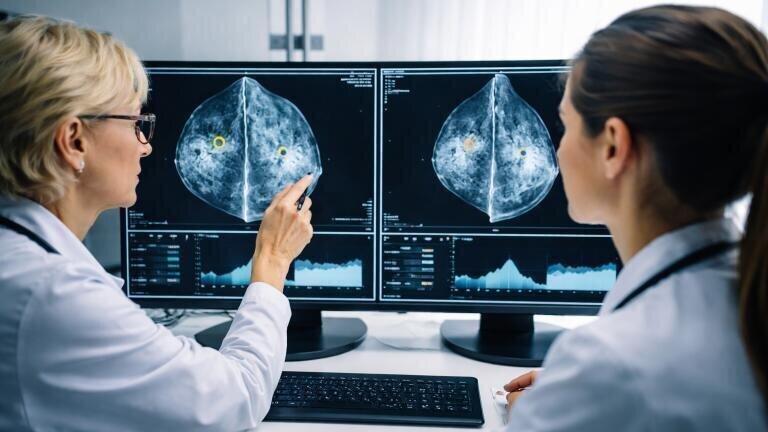
A major UK study has found that artificial intelligence (AI) can significantly improve breast cancer detection in routine screening, while also easing pressure on radiology services.
The evaluation [1], led by the University of Aberdeen in partnership with NHS Grampian and published in Nature Cancer, found that AI increased cancer detection rates by 10.4% and could reduce radiologists’ workload by more than 30%.
Researchers also reported that AI could cut the time to notify women of results from 14 days to just 3, potentially speeding up access to diagnosis and treatment.
The study assessed the use of the AI tool ‘Mia’ within NHS breast screening workflows, analysing nearly 11,000 mammograms as part of the GEMINI project. Seventeen different screening scenarios were tested to identify the most effective way to integrate AI into clinical practice.
The best results came from using AI as a second reader alongside clinicians, replacing one human reader while also acting as an additional safeguard. This approach improved detection without increasing unnecessary recalls.
Experts say the findings could help address long-standing pressures in breast screening, where two radiologists currently read every mammogram and around 20% of cancers are still missed.
Dr Clarisse de Vries, one of the study authors, said the work provides ‘high-quality evidence’ that AI can safely support screening and improve both accuracy and efficiency.
Professor Gerald Lip added that AI ‘augments practice’ by helping detect cancers earlier while reducing workload and burnout in overstretched services.
The study also highlighted reduced unnecessary recalls for further testing, potentially lowering patient anxiety and saving NHS resources.
Researchers say the findings address key evidence gaps previously highlighted by the UK National Screening Committee and will inform the upcoming EDITH trial, which will further test AI use across UK screening programmes.
A patient involved in the study, Yvonne Cook from Aberdeen, said AI played a crucial role in detecting her cancer at a very early stage, allowing for less invasive treatment and a quicker recovery.
The authors say further research is still needed, but the results point to a clear potential for AI to reshape breast cancer screening in the UK.
More information online
ILM 51.6 Sept 2026



 Product directory



















,-photo-Karin-Allander.jpg)




.jpg)
