.jpg)
Research news
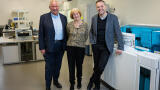
A University of St Andrews researcher has received a prestigious £1.6 million Career Development Award from the Medical Research Council (MRC) to develop a blood-based diagnostic tool for dementia - using advanced microscopy and molecular fingerprinting techniques to detect disease-linked protein structures.
Dr John Danial, from the School of Physics and Astronomy, is one of only nine UK recipients of the award this year. His project aims to create a diagnostic method capable of detecting a range of neurodegenerative diseases, including rare and currently hard-to-diagnose dementias, using patient blood samples.
The work builds on recent discoveries showing that amyloid proteins - implicated in diseases like Alzheimer’s - form distinct fibril structures in different types of dementia. If these structural ‘fingerprints’ can be identified in body fluids, they could serve as highly specific diagnostic markers.
To achieve this, Dr Danial’s team will develop a system to capture amyloid strands directly from blood, then apply bespoke fluorescent dyes developed by Amandeep Kaur at Monash University. These dyes bind to the fibrils, enabling their structural signatures to be visualised using high-resolution microscopy.
Dr Danial will collaborate closely with Professor Craig Ritchie at the University of St Andrews School of Medicine and Scottish Brain Sciences, as well as researchers at the MRC Laboratory of Molecular Biology in Cambridge, University College London, and the UK Dementia Research Institute.
“This award supports our ambition to develop a single accurate blood test for a wide range of brain diseases - including rare, fatal forms of dementia,” said Dr Danial. “We’re combining cutting-edge molecular tools with high-resolution imaging to create a diagnostic platform with real clinical impact.”
The project aligns with the MRC’s strategic priorities in neurosciences and mental health and aims to bridge the gap between laboratory discovery and clinical application by enabling earlier and more accurate dementia diagnosis.
More information online
ILM 51.6 Sept 2026




 Product directory


















,-photo-Karin-Allander.jpg)




.jpg)