News
Published over 11 years ago. See the latest and most current information on News.
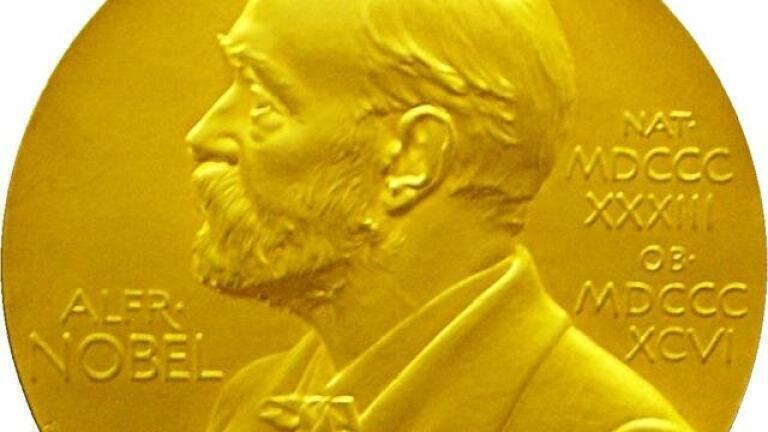
October saw the announcement of three separate Nobel Prizes in the respective categories of physiology or medicine, physics and chemistry.
The first prize, announced on Monday 6th Oct, was awarded to John O’Keefe, a British-American neuroscientist, and Norwegian couple Edvard and May-Britt Moser, for their combined work in discovering the existence of cells in the brain which act as a positioning system.
Then, the following day, the Prize for physics was shared by US professor Shuji Nakamura and Japanese duo Isamu Akasaki and Hiroshi Amano for their collected efforts in pioneering blue light-emitting diodes (LEDs), which are brighter and more efficient than traditional methods.
Then finally, on Wednesday, the third Nobel for in the field of science was awarded. The frontrunners for the chemistry accolade were, according to Thomson Reuters:
However, in something of an upset, none of the touted winners scooped the prize. Instead, the award went to Romanian-born German physicist, Stefan Hell, and American duo Eric Betzig and William Moener, for surpassing the supposed limitations placed on how minutely we can examine molecules, using a process known as nanoscale microscopy.
Interestingly, Eric Betzig is based at Howard Hughes Medical Institute’s (HHMI) Janelia Farm Research Campus. HHMI is enjoying something of a purple patch when it comes to Nobel Prizes, having produced laureates three years running and boasting an impressive track record of 20 awards in the field of the sciences in the last 30 years.
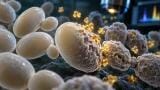
Nanoscale microscopy, sometimes shortened to nanoscopy, is the study of molecules at an incredibly acute scale. This allows them to monitor the creation of synapses between cells, investigate the role of certain proteins in the development of Alzheimer’s, Parkinson’s and Huntington’s diseases and also their role in fertilised eggs and their mutation into embryos.
Back in 1873, Ernst Abbe – an expert in the field at the time – predicted that science would never achieve a resolution greater than 0.2 micrometres in the traditional optical microscopic analysis of cells. Until recently, that prediction stood unchallenged.
However, over the past decade, the limit has been not only challenged but overcome, in two different ways. These are:
It’s not the only prize that nanoscopy has won in recent times. Back in 2006, a nanolaboratory won the R&D 100 Award for its nanoscale microscope. The prize is one of the most prestigious in the field, and this early success was followed up last week by nanoscopy’s triumph in the Nobel Prize realm, thanks to the breaking down of yet more barriers previously believed to be insurmountable.
ILM 51.6 Sept 2026

 Product directory










.jpg)
,-photo-Karin-Allander.jpg)




.jpg)
,-photo-Karin-Allander.jpg)